Why Choose a Pellet Tent Stove for Your First Winter Camp?
Winter camping is magical, but staying warm is the biggest challenge. Traditional wood stoves require constant feeding and monitoring, which can be intimidating for beginners. Pellet tent stoves offer a more controlled and often more efficient heating experience. They burn compressed wood pellets, providing a steady, adjustable flame with less fuss. For newcomers, the ability to set a feed rate and walk away (briefly) is a game-changer. Products like the Green Stove Hori 5 and Hori 5 Max are designed with beginners in mind, featuring simple controls and reliable ignition, but the principles below apply to any pellet stove.
Before You Go: Pre-Trip Preparation
1. Check Your Gear
- Stove and Tent Compatibility: Ensure your tent is rated for a stove, with a stove jack and proper clearances. The Hori 5 works well with most hot tents, but always check the manufacturer’s specs.
- Pellets: Use high-quality, dry wood pellets. Avoid pellets with additives or high moisture content. Plan on about 1-2 pounds per hour of burn time, depending on the stove and temperature.
- Tools and Spares: Carry a spark arrestor, a small brush for cleaning, and extra gaskets or bolts. A carbon monoxide detector is non-negotiable.
2. Practice at Home
Before heading into the wild, set up your stove in the backyard or garage. Practice assembling it, lighting it, and adjusting the feed rate. This builds confidence and lets you troubleshoot without the pressure of a cold night.
Step-by-Step Setup at Camp
Step 1: Choose the Right Spot
Look for flat, level ground. Ensure the tent is at least 10 feet away from any snowbanks or flammable materials. Check wind direction – you’ll want the stovejack on the leeward side to prevent smoke blowback.
Step 2: Set Up the Tent with Stove Clearances
Pitch your tent according to the manufacturer’s instructions, paying extra attention to the stove jack area. Keep the stove at least 36 inches away from tent walls and any gear. Use a stove mat or heat shield under the stove if recommended.
Step 3: Position the Stove and Pipe
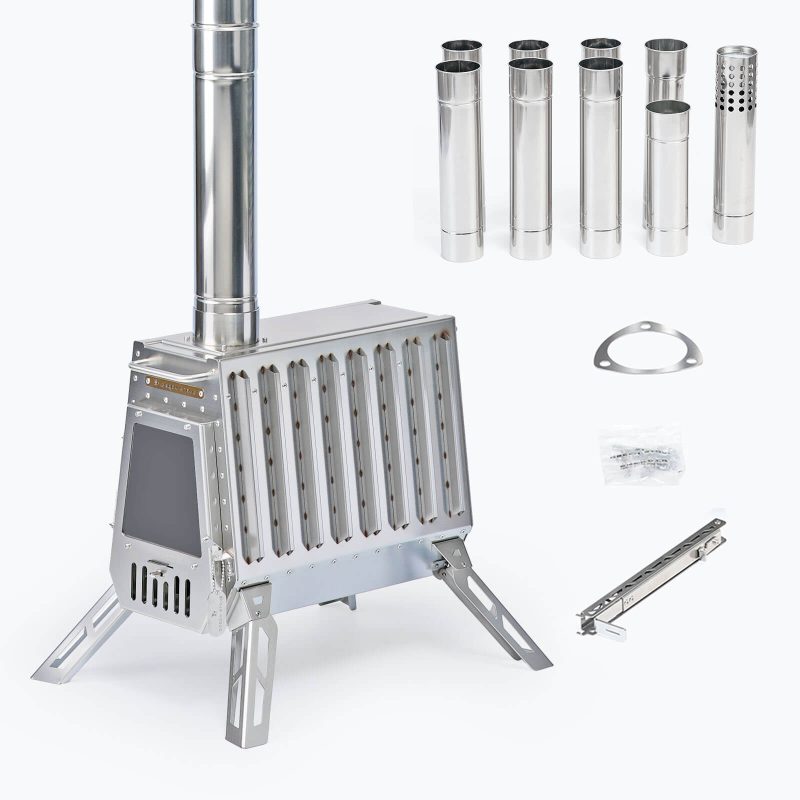
Place the stove on a stable, non-combustible surface. Attach the stovepipe sections, ensuring they fit snugly and are properly supported. The pipe should exit the tent at the stove jack, with a spark arrestor on top to prevent embers from escaping.
Step 4: Fill the Hopper and Prime the System
Fill the hopper with pellets, but don’t overfill – leave some space for the auger to feed properly. Prime the auger by turning it manually if required by your stove model. For the Hori 5, follow the manufacturer’s priming instructions.
Step 5: Light the Fire
Use a gel fire starter or a small amount of rubbing alcohol (never gasoline) on a few pellets in the burn pot. Ignite and close the door, then set the feed rate to the lowest setting. As the fire catches, gradually increase the feed rate to your desired heat level.
Step 6: Monitor and Adjust
Once burning, monitor the flame. A steady, blue-yellow flame indicates good combustion. Adjust the feed rate to maintain a comfortable tent temperature. Use a thermometer to keep the tent between 15-25°C (60-75°F) for sleeping.
Checklist for a Safe Overnight
- Carbon monoxide detector placed near your sleeping area, away from the stove.
- Fire extinguisher or a bucket of snow/water within reach.
- Ventilation: Even with a stove, crack a window or vent to allow fresh air in.
- Keep a flashlight and extra batteries handy.
- Store extra pellets in a dry, sealed container.
Common Mistakes Beginners Make
- Overfeeding the Stove: Too many pellets can cause a smoky, inefficient burn. Start low and adjust.
- Ignoring Altitude: Pellet stoves often struggle above 8,000 feet due to lower oxygen. Check your stove’s specifications; the Hori 5 is not recommended for high altitude without modifications.
- Poor Ventilation: Sealed tents lead to carbon monoxide buildup. Always ensure some airflow.
- Not Cleaning the Stove: Ash buildup reduces efficiency. Clean the burn pot and heat exchanger daily.
- Leaving the Stove Unattended: While pellet stoves are safer, never leave it burning while you sleep or leave the tent.
Shutting Down Safely
Before bed or when leaving the tent, let the fire burn down. Turn the feed rate to the lowest setting and allow the pellets to burn out. Once no flames remain, open the door to let the stove cool. Never pour water on a hot stove – thermal shock can crack it.
Why Green Stove Hori 5 and Hori 5 Max Fit the Bill
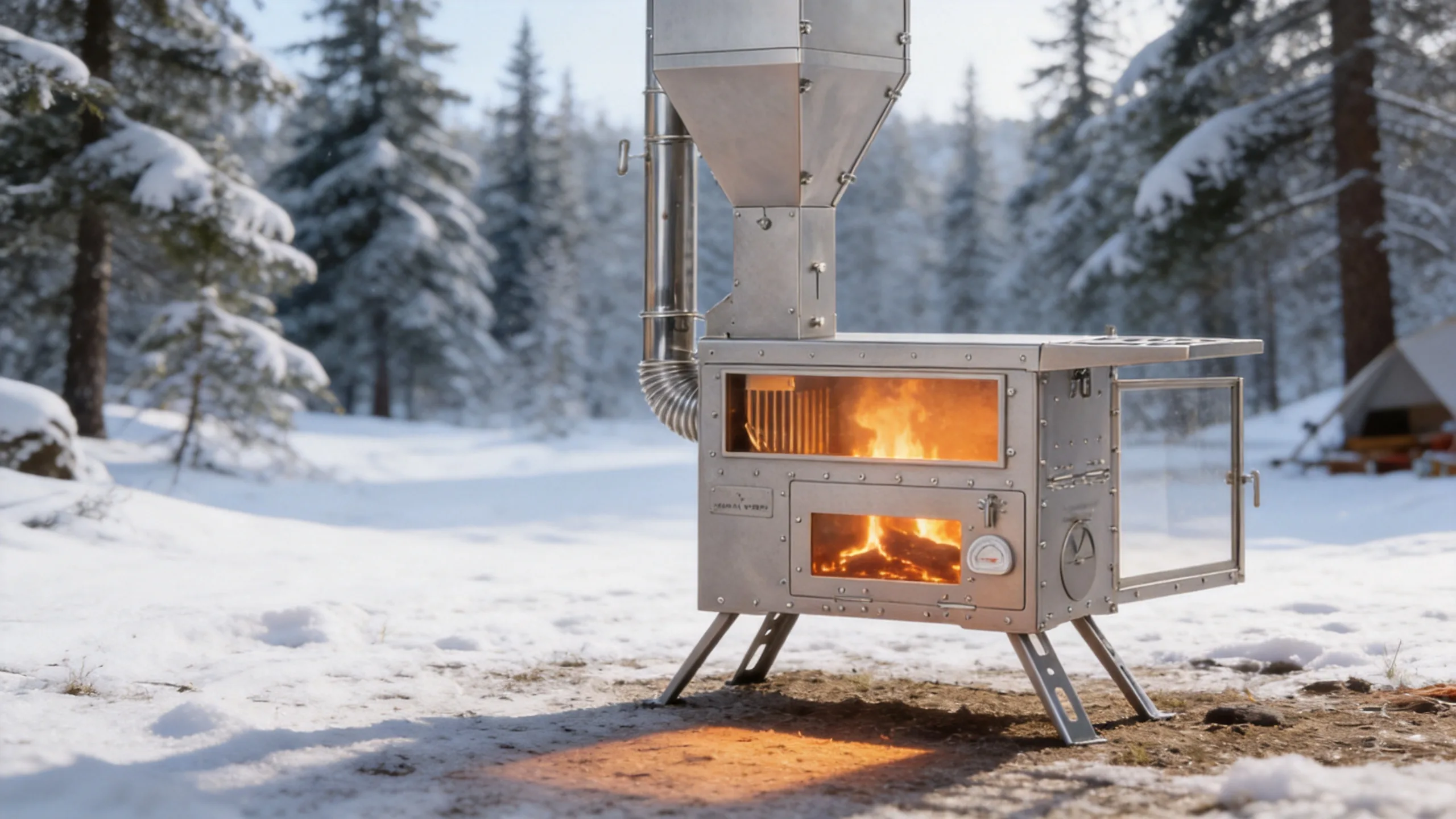
The Green Stove Hori 5 is a compact, portable pellet tent stove that’s ideal for beginners. Its automatic feed system simplifies temperature control, and the Hori 5 Max adds a larger hopper for longer burn times – perfect for overnight trips. Both models are designed with safety features like cool-touch handles and sturdy construction. While this guide focuses on general setup, these stoves are a reliable choice if you’re in the market.
Final Thoughts
Your first winter overnight with a pellet tent stove can be a comfortable, memorable experience. Preparation is key – practice at home, follow the checklist, and respect the stove. With the right setup, you’ll sleep warm and wake up ready for adventure.
FAQ
How long will a hopper of pellets last in a pellet tent stove?
It varies by stove model and heat setting. For example, the Green Stove Hori 5 without the extended hopper burns for about 10 hours on a low setting, while the Hori 5 Max can last longer. Always carry extra pellets to be safe.
Can I use a pellet tent stove at high altitudes?
Most pellet stoves, including the Hori 5, are not recommended above 8,000 feet due to lower oxygen levels, which can cause poor combustion. Check your stove’s manual for altitude limits and consider alternative heating if you camp high.
Is it safe to leave a pellet stove burning overnight?
While pellet stoves are safer than traditional wood stoves, it’s not recommended to leave any stove unattended while sleeping. Always have a carbon monoxide detector and ensure proper ventilation. Some campers do run it low overnight, but it’s safer to let it burn out.
What type of pellets should I use?
Use high-quality, food-grade wood pellets with low moisture content and no additives. Avoid heating pellets with binders or chemicals. Store them in a dry place to prevent clumping.
How do I clean a pellet tent stove?
After each use, let the stove cool completely. Empty the ash pan, brush the burn pot and heat exchanger, and wipe down the glass. Regularly check and clean the exhaust pipe to prevent creosote buildup.
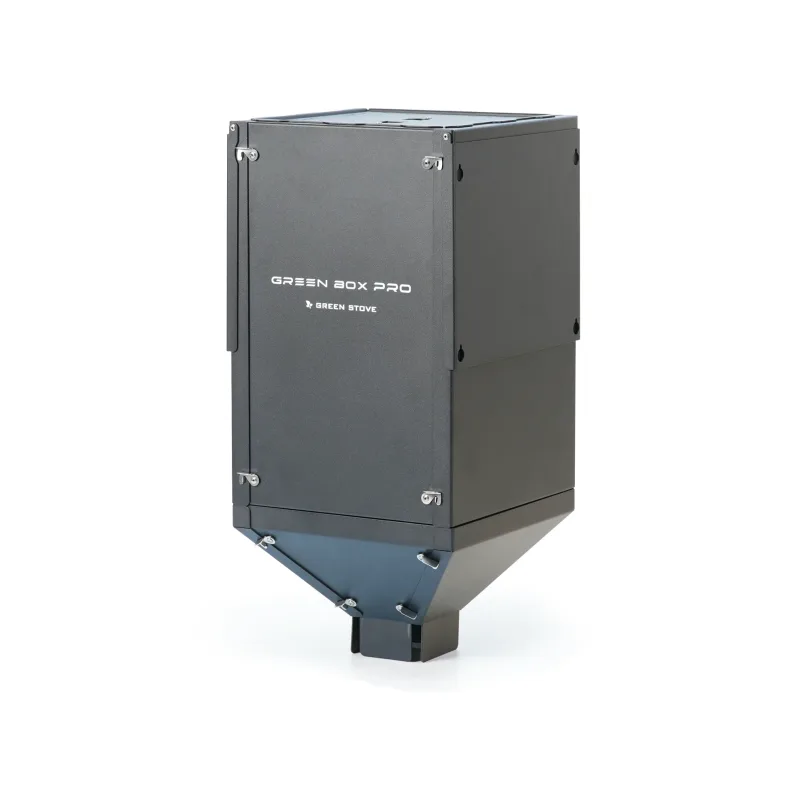
![Hori 5 Max Pellet Hot Tent Stove with Oven [Classic Control Version]](https://green-stove.com/wp-content/uploads/2025/10/hori5maxgreenstove002-800x800.webp)
![Hori 5 Max Pellet Hot Tent Stove with Oven [EASY OPERATION VERSION]](https://green-stove.com/wp-content/uploads/2026/09/61b6a5hzqRL._AC_SL1500_-800x800.webp)
![GREEN STOVE Hori 5 All-In-One Gravity Fed Pellet Wood Burning Hot Tent Stove [Classic Control Version]](https://green-stove.com/wp-content/uploads/2025/06/Green-Stove-Hori-5-Pellet-Stove-800x800.webp)