Why Carbon Monoxide Deserves Your Attention
Carbon monoxide (CO) is an odorless, colorless gas produced when fuels like wood, pellets, propane, or alcohol burn incompletely. In a tent, even a small amount can accumulate quickly, especially in sealed, storm‑worthy shelters designed to keep weather out. The symptoms—headache, dizziness, nausea, confusion—creep in gradually and are easy to mistake for fatigue or altitude sickness. The good news: with the right knowledge and gear, you can manage the risk and still enjoy a warm tent.
How Tent Stoves Produce CO
Any combustion appliance can produce CO, but tent stoves are particularly sensitive because they operate in a small, enclosed space. Factors that increase CO output include:
- Incomplete combustion: Starving a fire of oxygen, burning damp wood, or using too much fuel at once creates more CO.
- Poor draft: A cold chimney, a clogged spark arrestor, or a downwind setup can prevent exhaust from leaving the tent.
- Leaks: Gaps in stove seams, pipe joints, or a damaged door gasket allow exhaust to enter the living space.
- Improper fuel: Burning trash, pressure‑treated wood, or oversized pellets can smolder and produce CO.
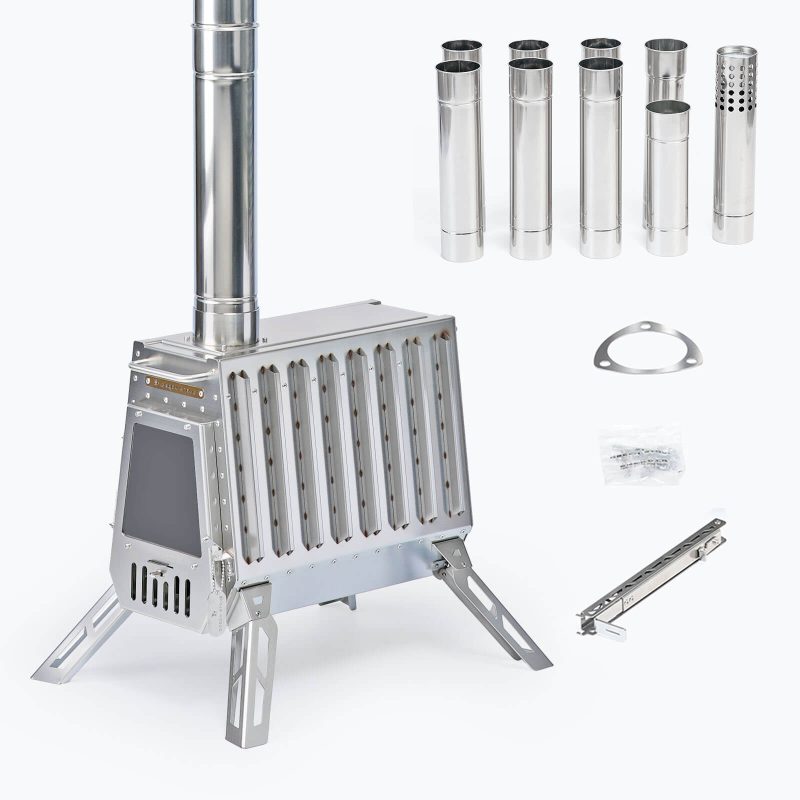
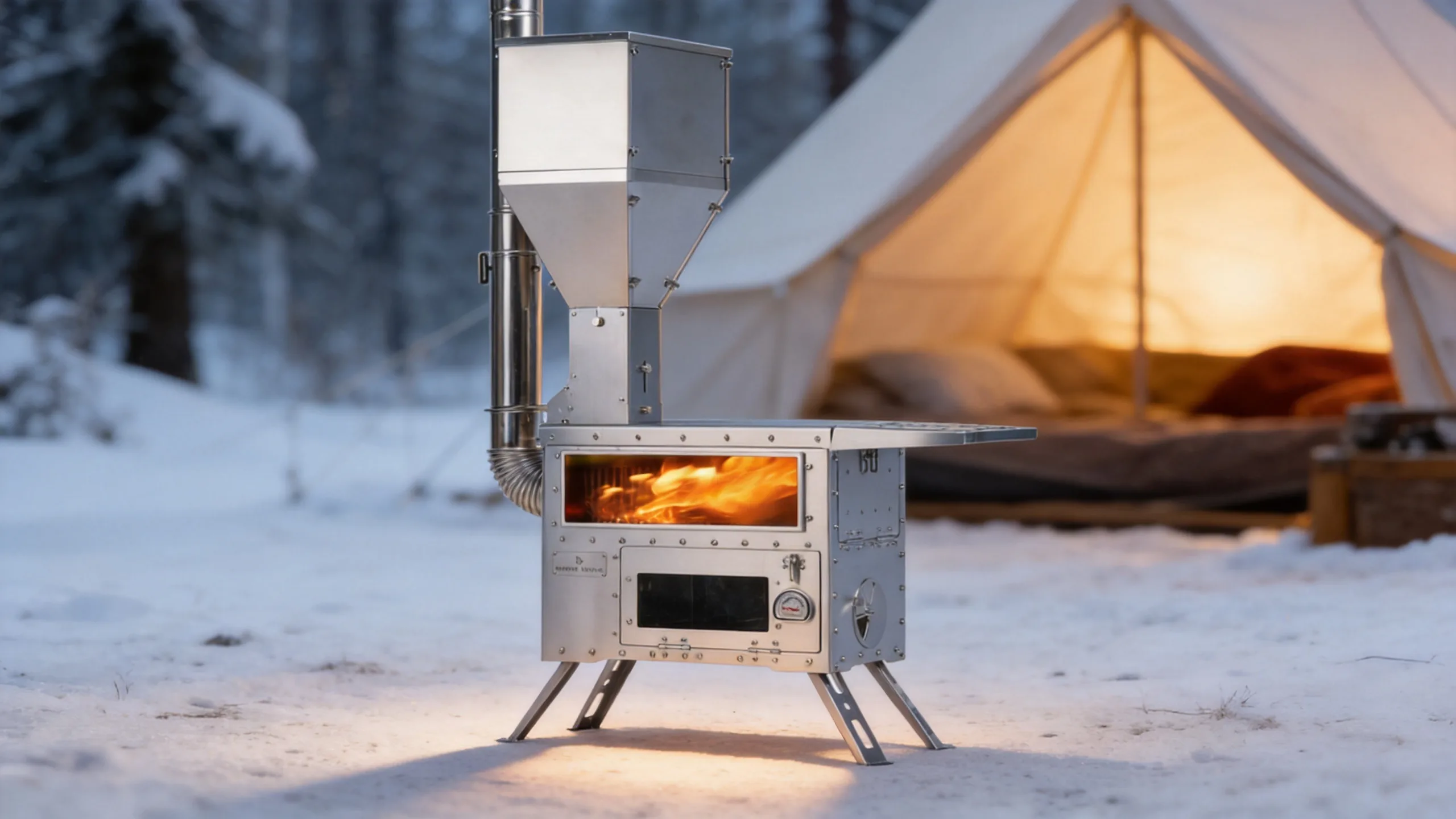
Pellet stoves like the Green Stove Hori 5 and Hori 5 Max are designed for controlled, efficient burns, but they still require proper installation, fuel, and ventilation to keep CO levels safe.
Ventilation: Your First Line of Defense
Even a well‑sealed tent needs fresh air. CO poisoning happens when exhaled CO builds up faster than it can escape. Follow these ventilation rules:
- Keep a vent open: Always leave a low vent and a high vent cracked, even in extreme cold. A cross‑flow moves CO out and brings oxygen in.
- Don’t rely on the stove pipe alone: The chimney removes most exhaust, but leaks and backdrafts can still occur. A dedicated tent vent is not optional.
- Watch the weather: High winds can cause downdrafts. If smoke rolls into the tent when you open the door, improve your setup or wait for calmer conditions.
- Never sleep with a smoldering fire: If the stove is not burning hot and clean, shut it down and rely on your sleeping bag.
Burn Clean, Burn Hot
CO production drops dramatically when fuel burns hot and complete. Here’s how to achieve that with any tent stove:
- Use dry, seasoned wood or quality pellets: Moisture steals heat and creates smoke. For pellet stoves, use pellets rated for heating, not BBQ or flavored varieties.
- Don’t overfill: A packed firebox smolders. Add fuel in small batches and let it flame up.
- Preheat the chimney: A cold pipe can reverse draft. Light a small kindling fire first, or use a torch to warm the flue before adding fuel.
- Check the flame: A lazy, orange, smoky fire is a CO factory. You want bright, active flames with little visible smoke from the chimney.
Pellet stoves like the Green Stove Hori 5 and Hori 5 Max are engineered for consistent, hot burns, but they still need dry fuel and a clear chimney to perform safely.
Gear Checklist for CO Safety
You don’t need a lab to stay safe. A few inexpensive items can make a big difference:
- CO alarm: Choose a battery‑powered alarm with a digital display, rated for camping or RV use. Place it near sleeping level, not just near the stove.
- Smoke alarm: A small travel smoke alarm adds another layer of protection.
- Chimney thermometer: Monitoring flue temperature helps you avoid creosote buildup and confirms a good draft.
- Spare batteries: Test your alarms before every trip and carry extras.
- Flashlight or headlamp: If an alarm sounds at night, you need to evacuate quickly and safely.
- Fire extinguisher: A small ABC extinguisher belongs in every hot tent.
Decision Rules: When to Light, When to Sleep
Safety is about making good calls in the moment. Use these simple rules:
Before You Light
- Is your CO alarm working and placed correctly?
- Is the stove installed per the manufacturer’s instructions, with proper clearances and a secure chimney?
- Is the tent ventilated with at least two openings?
- Is the fuel dry and appropriate for your stove?
While Burning
- If you feel headache, dizziness, or nausea, get outside immediately—even if you’re not sure it’s CO.
- If the fire is smoldering or smoke backs up, fix the draft or extinguish the stove.
- If wind changes direction and causes downdrafts, adjust the chimney or shut down.
Overnight
- Never sleep with a stove burning unless you have a CO alarm and reliable ventilation. Even then, many experts recommend letting the fire die out before you sleep.
- If you must keep a fire going, set an alarm to wake and check the stove, and keep your CO alarm within reach.
- Have an emergency plan: know how to exit the tent in the dark and where your backup warm layers are.
Special Considerations for Pellet Stoves
Pellet stoves offer convenience and consistent heat, but they have unique CO risks. A jammed auger can cause a smoldering fire, and pellet dust can clog air intakes. The Green Stove Hori 5 and Hori 5 Max are designed with safety features, but you should still:
- Clean the burn pot and ash pan regularly to maintain airflow.
- Use only the recommended pellet size and type.
- Check the chimney and air intake for blockages before each use.
- Never leave a pellet stove unattended for long periods without a CO alarm.
What to Do If Your CO Alarm Sounds
Don’t panic—act. CO alarms are designed to warn you before levels become dangerous.
- Get everyone outside immediately. Leave the tent, unzip doors, and move to fresh air.
- Call for help if symptoms are severe. If anyone has confusion, vomiting, or loss of consciousness, seek emergency medical care.
- Do not re‑enter until the alarm stops and you’ve ventilated thoroughly. Open all vents and doors, and let the tent air out for at least 15 minutes.
- Find and fix the source. Check the stove, chimney, and ventilation. Do not use the stove again until you’re confident it’s safe.
Final Thoughts
Carbon monoxide doesn’t have to be a dealbreaker for winter camping. With a healthy respect for combustion, a reliable CO alarm, and smart ventilation habits, you can enjoy the warmth of a tent stove while keeping your crew safe. Remember: the goal is not to eliminate risk entirely—it’s to manage it with knowledge and preparation.
FAQ
Can I use a tent stove without a CO alarm?
It’s strongly discouraged. A CO alarm is your only reliable warning against an odorless, invisible threat. Always use a battery‑powered CO alarm rated for camping or RV use, and test it before every trip.
Is it safe to sleep with a pellet stove burning?
It can be safe only if you have a working CO alarm, proper ventilation, and a stove that is burning cleanly. However, many safety experts recommend letting the fire die out before you sleep to eliminate the risk entirely.
How much ventilation does a hot tent need?
At minimum, keep a low vent and a high vent open to create cross‑flow. Even in freezing temperatures, that airflow is essential to prevent CO buildup. Never seal a tent completely while a stove is burning.
What are the first signs of CO poisoning?
Early symptoms include headache, dizziness, nausea, and confusion. They can come on gradually and are often mistaken for cold or fatigue. If you suspect CO, get outside immediately and seek fresh air.
Are pellet stoves safer than wood stoves for CO?
Pellet stoves can burn more efficiently and produce less CO when operated correctly, but they are not inherently safer. Both require proper installation, fuel, and ventilation. A CO alarm is essential with any stove.
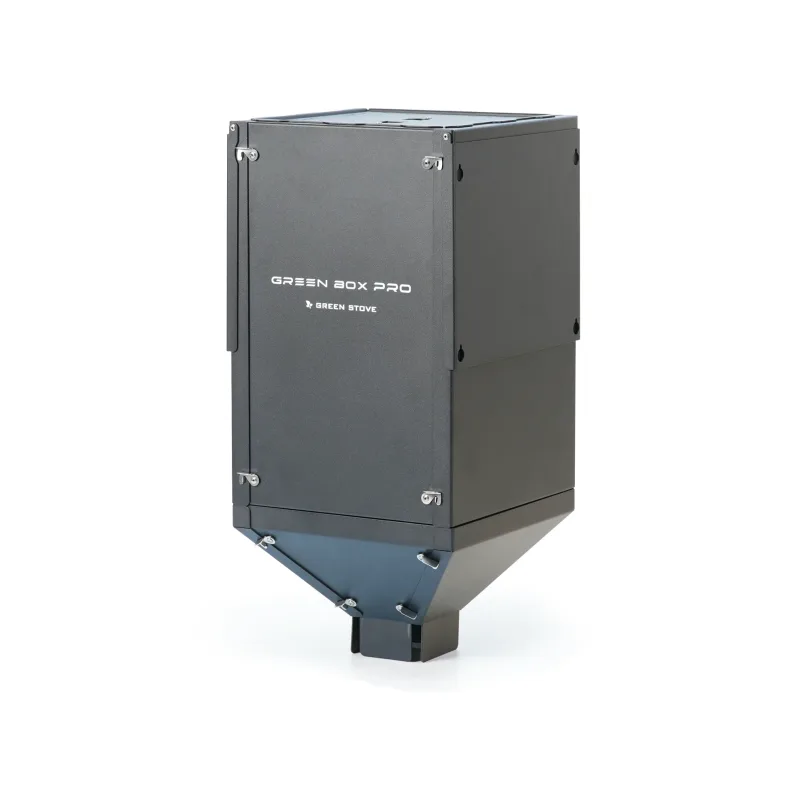
![Hori 5 Max Pellet Hot Tent Stove with Oven [Classic Control Version]](https://green-stove.com/wp-content/uploads/2025/10/hori5maxgreenstove002-800x800.webp)
![Hori 5 Max Pellet Hot Tent Stove with Oven [EASY OPERATION VERSION]](https://green-stove.com/wp-content/uploads/2026/09/61b6a5hzqRL._AC_SL1500_-800x800.webp)
![GREEN STOVE Hori 5 All-In-One Gravity Fed Pellet Wood Burning Hot Tent Stove [Classic Control Version]](https://green-stove.com/wp-content/uploads/2025/06/Green-Stove-Hori-5-Pellet-Stove-800x800.webp)