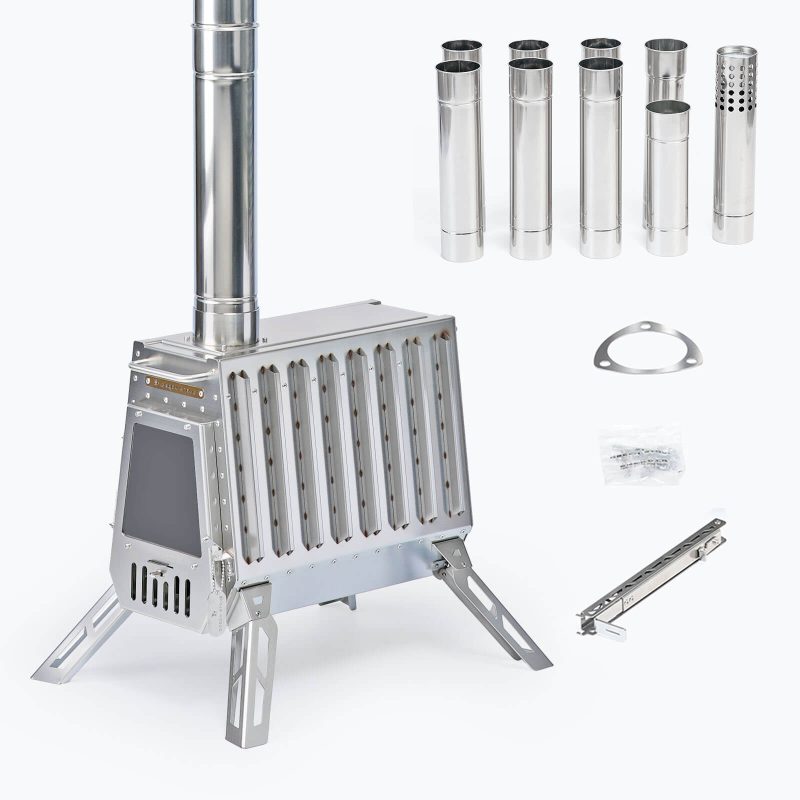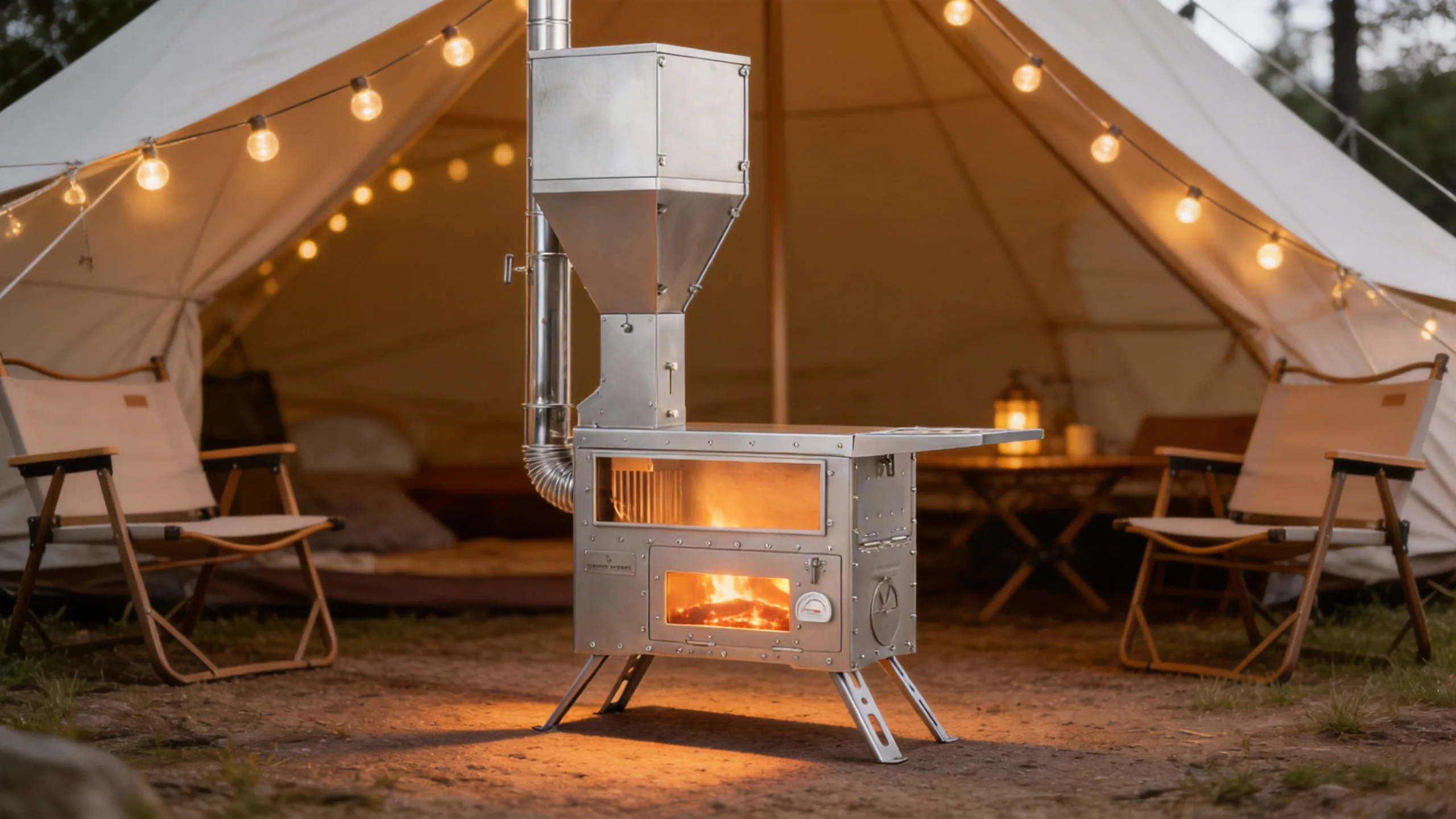
Why Cook on a Pellet Tent Stove?
Hot tent camping with a pellet stove isn’t just about staying warm—it’s about turning your shelter into a cozy basecamp where you can boil water, simmer stew, and even bake. Unlike open campfires, a pellet stove offers a controlled burn and a flat top, making it a surprisingly capable cooking surface. But cooking on a pellet stove is different from a home range or a campfire. You need to understand heat control, airflow, and the quirks of pellet fuel.
In this guide, we’ll walk you through the essentials: choosing the right kettle, mastering simmering, and avoiding the rookie mistakes that can ruin a meal—or worse, create a safety hazard. We’ll also show how stoves like the Green Stove Hori 5 and Hori 5 Max fit into the picture, but the focus is on technique, not gear.
Step 1: Set Up Your Stove for Cooking
Before you even think about placing a pot, your stove needs to be running cleanly. A pellet stove that’s smoldering or producing heavy smoke will coat your cookware in soot and give food an acrid taste.
- Use dry, quality pellets. Wet or dusty pellets clog the auger and burn inefficiently. Look for food-grade or premium hardwood pellets with low ash content.
- Ensure proper draft. Most pellet tent stoves, including the Hori 5, recommend 6–7 feet of vertical pipe. If you use elbows, add extra length to compensate.
- Preheat thoroughly. Let the stove reach a steady burn (usually 10–15 minutes) before putting any cookware on top. This prevents cold spots and uneven heating.
- Clean the burn pot. A clean burn pot means better combustion and less residue on your pots.
Step 2: Choose the Right Cookware
Not all pots are created equal on a pellet stove. The surface is typically smaller than a home stove, and heat distribution can be uneven.
- Flat-bottomed cookware is a must. Cast iron, stainless steel, and hard-anodized aluminum work well.
- Use a kettle with a wide base. A wide base catches more heat and boils faster. A classic whistling kettle is perfect.
- Skip thin pots. They’ll create hot spots and burn food easily.
- Consider a heat diffuser. A simple steel plate placed between the stove top and your pot can spread heat more evenly—essential for simmering.
Step 3: Master the Art of Simmering
Simmering on a pellet stove is tricky because the heat output isn’t as finely adjustable as a gas burner. But with a few tricks, you can achieve a gentle bubble.
- Let the fire settle. After adding pellets, wait for the flames to die down and the coals to glow. That’s your low-heat window.
- Use a diffuser. Place a diffuser or a trivet between the stove top and your pot. This reduces direct heat and prevents scorching.
- Adjust the air intake. Most stoves have a damper or slider. Closing it partially reduces oxygen, which lowers the burn rate—but don’t choke it too much or you’ll get smoldering.
- Cook with the lid on. Trapping steam helps maintain a steady temperature and keeps food from drying out.
- Rotate the pot occasionally. Since heat isn’t perfectly uniform, rotating ensures even cooking.
Step 4: Quick-Boil Kettle Tricks
Boiling water fast is one of the best uses of a pellet stove. Here’s how to get your kettle roaring:
- Use the hottest part of the stove. On most pellet stoves, the center of the top plate is hottest. Place the kettle there.
- Keep the stove at a high burn. Feed pellets more frequently to maintain a vigorous flame. A full hopper and open air intake will give you maximum heat.
- Use a kettle with a heat exchanger. Some camping kettles have fins or a coiled tube that increases surface area and speeds boiling.
- Cover the kettle. A lid traps heat and reduces boiling time.
- Don’t fill to the brim. Less water boils faster. Boil only what you need.
Common Mistakes to Avoid
- Overloading the stove top. A huge pot might block airflow or cause the stove to overheat. Keep cookware proportional to the stove.
- Ignoring carbon monoxide risk. Always have a CO detector in your tent. Pellet stoves produce CO, especially if the fire is smoldering. Ventilation is critical.
- Using dirty or wet pellets. They cause poor combustion, creosote buildup, and can ruin your meal with bitter smoke.
- Leaving food unattended. Pellet stoves can flare up when you add fuel. Never leave a pot on the stove while you’re outside.
- Forgetting to preheat. Putting a cold pot on a cold stove leads to slow cooking and potential thermal shock to your cookware.
- Choking the air intake too much. This creates smoldering, which wastes fuel and produces more CO. Find a balance.
Checklist: Cooking Success on a Pellet Tent Stove
- Use dry, quality pellets.
- Preheat the stove thoroughly.
- Choose flat-bottomed, sturdy cookware.
- Have a heat diffuser ready for simmering.
- Adjust air intake for heat control.
- Keep a CO detector inside the tent.
- Never leave cooking unattended.
- Clean the burn pot regularly.
How the Green Stove Hori 5 Fits In
While the techniques above apply to any pellet tent stove, some designs make cooking easier. The Green Stove Hori 5 and Hori 5 Max feature a flat, sturdy top plate that provides a stable cooking surface. The Hori 5 Max adds a larger hopper, extending burn time—which is handy for long simmering sessions. Both models are designed with a clean-burning auger system, reducing smoke and soot, so your pots stay cleaner. But remember, even the best stove requires skill. Practice these tips, and you’ll be whipping up gourmet meals in your hot tent in no time.
Frequently Asked Questions
Can I use any pot on a pellet tent stove?
You should use flat-bottomed, heat-resistant cookware. Avoid thin pots that can warp or create hot spots. Cast iron and stainless steel are excellent choices.
How do I control the temperature for simmering?
Use a heat diffuser and adjust the stove’s air intake to lower the burn rate. Wait for the flames to settle into glowing coals before placing your pot on a diffuser.
Is it safe to cook inside a tent with a pellet stove?
Yes, if you have proper ventilation and a carbon monoxide detector. Never cook with the tent fully sealed. Always follow the stove manufacturer’s safety guidelines.
How long does it take to boil water on a pellet stove?
It depends on the stove’s heat output and the kettle’s size. On a high burn, a small kettle of water can boil in 5–10 minutes. Using a covered kettle and the hottest part of the stove speeds things up.
What type of pellets are best for cooking?
Use premium hardwood pellets with low ash content and no additives. Food-grade pellets are ideal, as they produce less soot and burn cleaner.
FAQ
Can I use any pot on a pellet tent stove?
You should use flat-bottomed, heat-resistant cookware. Avoid thin pots that can warp or create hot spots. Cast iron and stainless steel are excellent choices.
How do I control the temperature for simmering?
Use a heat diffuser and adjust the stove’s air intake to lower the burn rate. Wait for the flames to settle into glowing coals before placing your pot on a diffuser.
Is it safe to cook inside a tent with a pellet stove?
Yes, if you have proper ventilation and a carbon monoxide detector. Never cook with the tent fully sealed. Always follow the stove manufacturer’s safety guidelines.
How long does it take to boil water on a pellet stove?
It depends on the stove’s heat output and the kettle’s size. On a high burn, a small kettle of water can boil in 5–10 minutes. Using a covered kettle and the hottest part of the stove speeds things up.
What type of pellets are best for cooking?
Use premium hardwood pellets with low ash content and no additives. Food-grade pellets are ideal, as they produce less soot and burn cleaner.
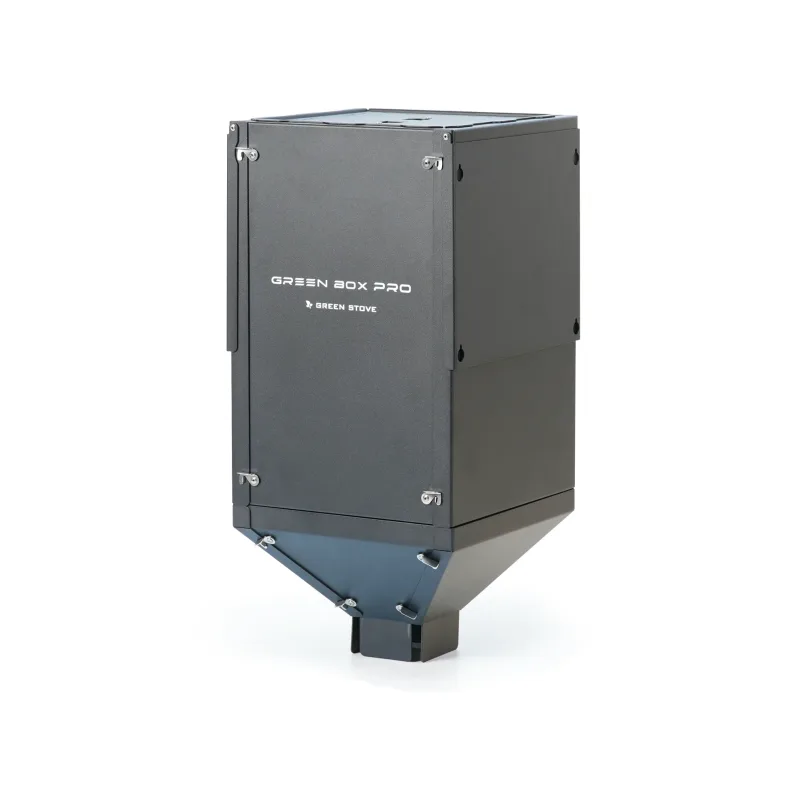
![Hori 5 Max Pellet Hot Tent Stove with Oven [Classic Control Version]](https://green-stove.com/wp-content/uploads/2025/10/hori5maxgreenstove002-800x800.webp)
![Hori 5 Max Pellet Hot Tent Stove with Oven [EASY OPERATION VERSION]](https://green-stove.com/wp-content/uploads/2026/09/61b6a5hzqRL._AC_SL1500_-800x800.webp)
![GREEN STOVE Hori 5 All-In-One Gravity Fed Pellet Wood Burning Hot Tent Stove [Classic Control Version]](https://green-stove.com/wp-content/uploads/2025/06/Green-Stove-Hori-5-Pellet-Stove-800x800.webp)