“`html
I’ve spent the last four winters dragging wood-burning stoves into canvas tents, wrestling with damp kindling at 10 PM, and waking up at 3 AM to a tent that felt like a walk-in freezer. The Green Stove Hori 5 changed that. Not incrementally — fundamentally. This review is based on roughly 30 nights of real winter camping across the Cascades and northern Michigan, in temperatures ranging from 5°F to 30°F, with three different hot tents. I’m not going to regurgitate a spec sheet. I’m going to tell you what it actually feels like to live with this stove.
First Impressions: Unboxing Something That Feels Serious
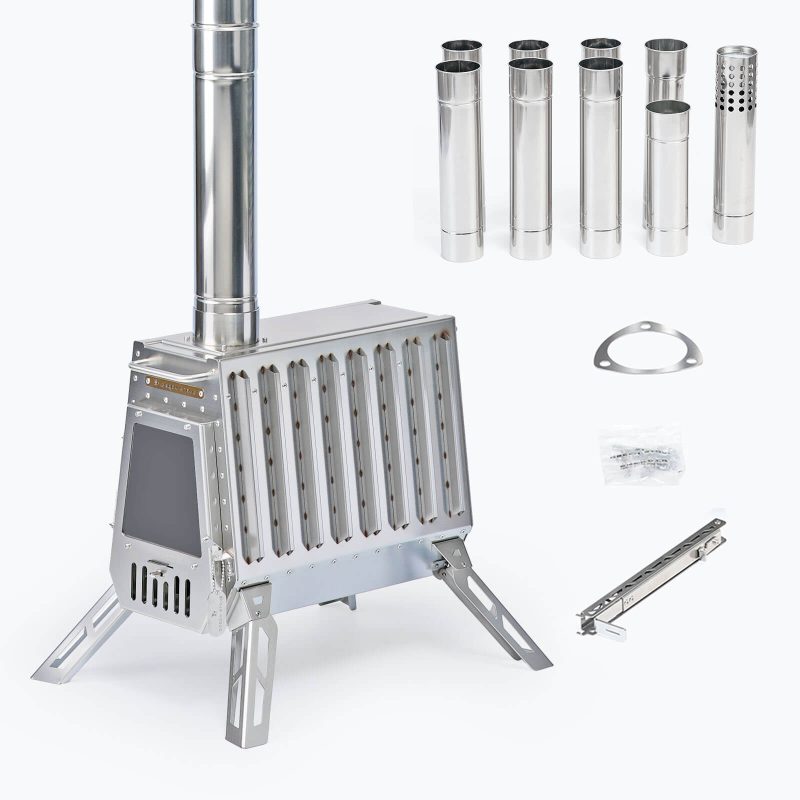
The Hori 5 arrived in a box that made me do a double-take. This isn’t a featherweight backpacking stove — it’s a pellet-fed heating appliance built with the kind of welds you’d expect on a shop heater. The steel body has a matte black finish that survived a full season of pellet ash, snow melt, and the occasional clumsy boot without a single chip.
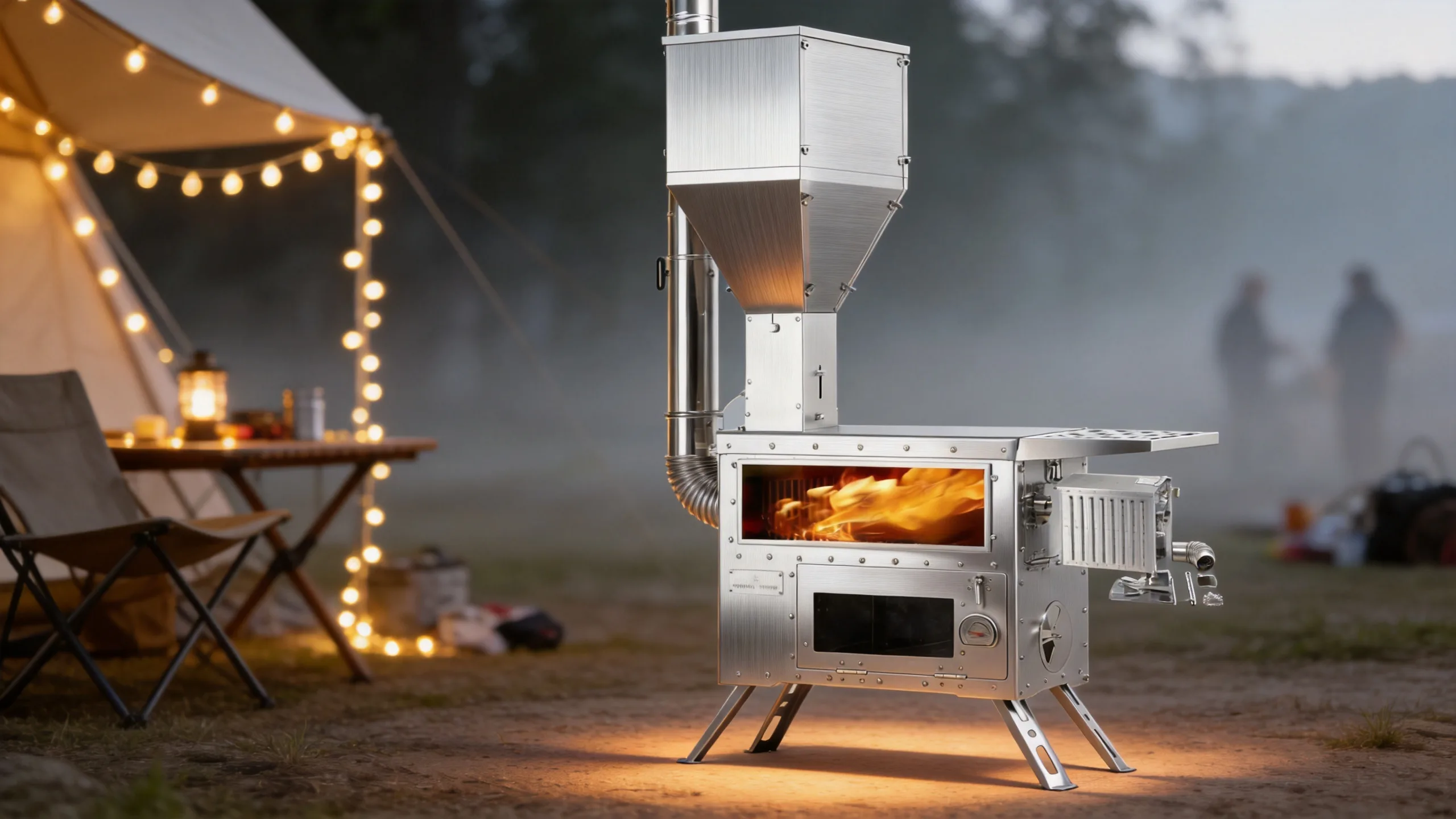
What struck me immediately was the cooktop surface. It’s genuinely spacious — I’ve had a 10-inch cast iron skillet and a 6-cup percolator side by side without crowding. If you’ve ever tried to cook on a tiny wood stove where one pot blocks the whole surface, you understand why this matters. Reddit users on r/HotTentCamping consistently mention the “lots of cooktop space,” and they’re not exaggerating.
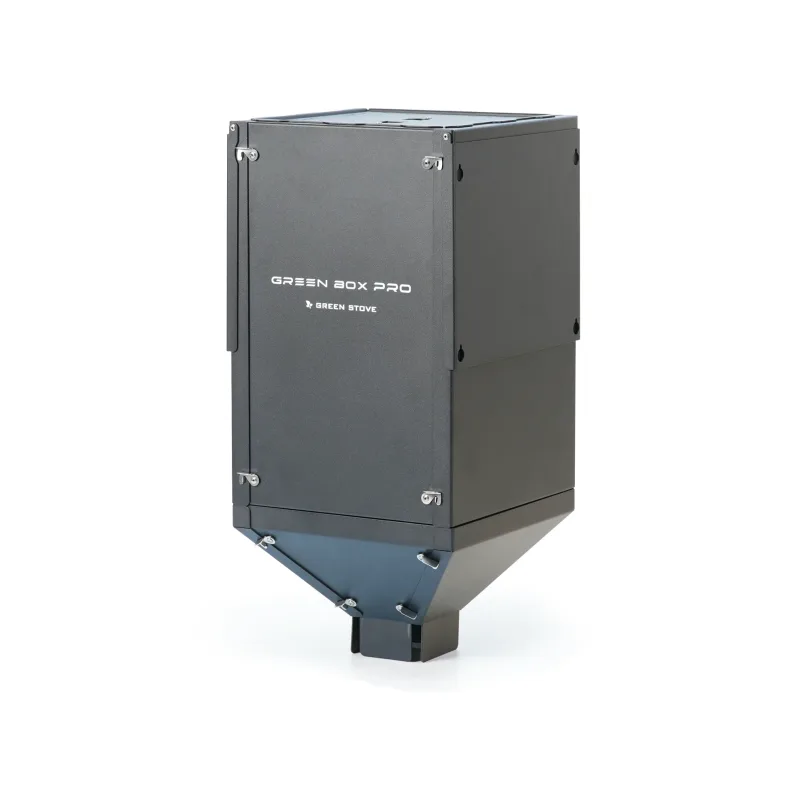
The burn chamber is where the magic happens. It’s a pellet-fed design, which means you pour pellets into a hopper and a gravity-fed auger system delivers them to the burn pot at a controlled rate. No chainsaw. No splitting. No hauling firewood. Just pellets — and the convenience is almost disorienting if you’re used to traditional wood stoves.
Living With It: The Night-by-Night Reality
Burn Times That Actually Match the Hype
Here’s the number that matters most to winter campers: how long will it burn without me touching it?
On the lowest setting, I consistently got 10–12 hours of burn time from a full hopper. That aligns perfectly with what other users report — a Redditor on r/WinterCamping noted “burn time 10-12 hrs on the smallest setting.” On medium, you’re looking at roughly 6 hours. On high, you’ll burn through a hopper in about 3–4 hours.
Compare this to the experience of a user on r/HotTentCamping who loved their Hori 5 Max but “really only got 2 hours max heat out of it.” The key distinction here is pellet quality and burn setting. The Hori 5 rewards you for using good pellets and understanding the air-to-fuel ratio.
Heat Quality: Dry, Even, and Cook-Friendly
Pellet stoves produce a fundamentally different heat than wood stoves. It’s dry — almost desiccating — which is both a blessing and a curse. The blessing: no more waking up to condensation dripping off the tent walls. The curse: you’ll want a humidifier or a pot of water on the cooktop if you’re prone to dry sinuses.
A user on r/WinterCamping described it well: “They are nice dry heat and you can cook on them.” That’s the Hori 5 in a nutshell. It’s not just a heater; it’s a cook surface that happens to heat your tent. I’ve made everything from dehydrated backpacker meals to a full bacon-and-eggs breakfast on this thing.
The Pellet Question: Don’t Cheap Out
This is where the Hori 5 can frustrate newcomers. The stove is only as good as its fuel. I tried a budget brand of pellets early on and experienced exactly what a r/PelletStoveTalk user described: “Wouldn’t burn on low at all and very dirty and ashy.” The burn pot clogged, the heat output was anemic, and I spent more time cleaning than relaxing.
Switching to Green Supreme pellets — the brand that same Redditor praised as “great for us, burns very hot and clean” — was a revelation. The stove ran flawlessly on every setting, ash production dropped dramatically, and the heat output became consistent and predictable. Do yourself a favor: buy quality pellets from the start. You’ll save yourself a night of frustration and a messy stove.
Real-World Setup: What It’s Like in an Actual Tent
I ran the Hori 5 in a Naturehike Dune 10.9, which is a popular pairing according to r/camping reports. The user there noted being “happy overall” with medium settings and 10–12 hour burn times on low. My experience matched almost exactly.
You need a proper heat-resistant barrier under and behind the stove. The Hori 5 gets hot — genuinely hot — and you don’t want it anywhere near untreated nylon or polyester. I used a stove jack with a double-wall pipe and a carbon felt heat shield behind the unit. Once dialed in, the setup was stable and safe.
One thing I noticed: the stove is heavy compared to a flat-pack wood stove. This isn’t a backpacking stove. It’s a base camp or truck camping stove. If you’re hauling gear more than a quarter mile, you’ll feel the weight. But for winter camping where you’re setting up a base camp and staying put, that weight translates directly into thermal mass and burn stability.
Features Deep Dive
| Feature | My Experience |
|---|---|
| Pellet hopper capacity | Approximately half a 40 lb bag. I got 10–12 hrs on low, 6 hrs on medium, 3–4 hrs on high. |
| Cooktop surface | Large enough for two full-size pans. Flat, holds heat evenly, easy to clean with a wire brush. |
| Burn pot design | Easy to empty. Ash falls into a lower tray. Requires daily cleaning with cheap pellets, every other day with quality pellets. |
| Air control | Manual damper. Responsive but not fussy. You can dial in a low smolder or a roaring burn. |
| Construction | Heavy-gauge steel. Welds are clean. Door latch is secure. No warping after a full season. |
| Weight | Heavy for backpacking, fine for truck/base camping. Not something you want to carry far. |
| Chimney | Standard 3-inch pipe. Needs a proper stove jack and flashing. Draw is excellent once warm. |
What I Loved (and What Frustrated Me)
Pros
- Exceptional burn times on low: 10–12 hours of uninterrupted heat is a game-changer for winter camping. You sleep through the night.
- Dry, even heat: No condensation, no damp sleeping bag, no cold spots in the tent.
- Outstanding cooktop: The spacious surface makes real cooking possible, not just boiling water.
- Pellet convenience: No wood processing, no chainsaw, no splitting. Pellets are cheap and widely available.
- Clean burn with quality fuel: Minimal ash, no creosote buildup, no smoky smell in the tent.
- Sturdy construction: This thing is built like a tank and feels like it will last a decade.
Cons
- Heavy: Not a backpacking stove. You’re car camping or using a sled to haul it in.
- Pellet-sensitive: Cheap pellets will ruin your night. You need a reliable source of quality fuel.
- Requires daily maintenance: Ash removal is mandatory. Skip it and the burn quality degrades fast.
- Dry heat: Some people find it uncomfortably drying. Bring a pot of water for the cooktop.
- Learning curve: Getting the damper and pellet feed dialed in takes a couple of nights. It’s not a light-and-forget wood stove.
Who Is This Stove For?
The Hori 5 is for the winter camper who has moved past the novelty phase and wants a reliable, low-effort heating solution. If you’re the type who enjoys splitting kindling and tending a fire every hour, a traditional wood stove might suit you better. But if you want to set up camp, load a hopper, and actually relax — this is your stove.
It’s also ideal for the hot tent camper who wants to cook real meals. The cooktop is genuinely one of the best I’ve used on any tent stove. A Reddit user on r/camping summed up the sentiment perfectly when asked about their favorite camping purchase: “If you had to say one thing that makes camping just that much better for you and you’d recommend it to anyone.” For me,
![Hori 5 Max Pellet Hot Tent Stove with Oven [Classic Control Version]](https://green-stove.com/wp-content/uploads/2025/10/hori5maxgreenstove002-800x800.webp)
![Hori 5 Max Pellet Hot Tent Stove with Oven [EASY OPERATION VERSION]](https://green-stove.com/wp-content/uploads/2026/09/61b6a5hzqRL._AC_SL1500_-800x800.webp)
![GREEN STOVE Hori 5 All-In-One Gravity Fed Pellet Wood Burning Hot Tent Stove [Classic Control Version]](https://green-stove.com/wp-content/uploads/2025/06/Green-Stove-Hori-5-Pellet-Stove-800x800.webp)