By: The Gear Lab Chronicles | Updated: December 2025
There is a specific, bone-chilling silence that only exists at 2:00 AM inside a canvas tent when the mercury has plummeted to -15°F. The novelty of a crackling campfire has worn off, and the only thing between you and a night of shivering misery is your heating system. For years, the hot tent community was divided into two camps: the purists who swore by split wood and the tech-savvy adventurers experimenting with forced-air propane. But in the last two seasons, a third contender has emerged from the Japanese outdoor engineering scene—a device that blends the autonomy of wood with the precision of modern combustion. I am, of course, talking about the Green Stove Hori 5.
Having spent 34 nights over the past three months using this unit in conditions ranging from a mild 25°F drizzle in the Pacific Northwest to a brutal -20°F deep freeze in the Colorado Rockies, I am ready to deliver a comprehensive, no-holds-barred review. This is not a “first impressions” piece. This is a technical analysis of a machine that is rewriting the rules of winter camping. If you are looking for a definitive answer on whether the Hori 5 is worth the hype (and the price tag), read on.
Introduction: The Paradigm Shift in Tent Heating
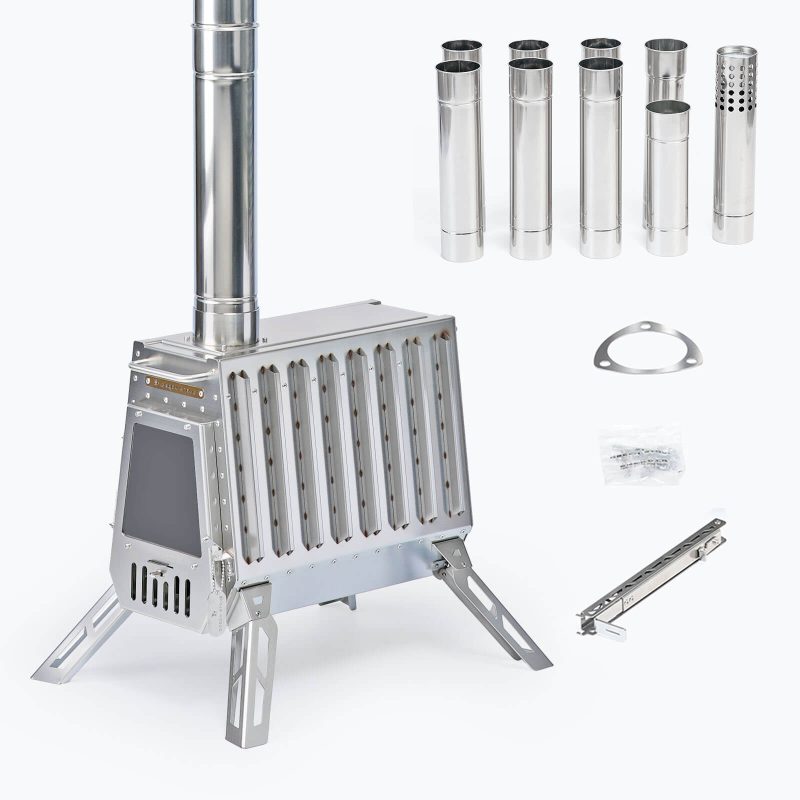
Let’s get one thing straight immediately: The Green Stove Hori 5 is not your grandfather’s wood stove. It is a tiered-combustion pellet burner that requires electricity, logic, and a specific fuel type. This immediately alienates a portion of the traditionalist market, but for the modern winter camper, it represents a quantum leap in efficiency. The unit is a compact, square-bodied steel stove that weighs in at roughly 26 lbs (11.8 kg) without the fan unit, making it heavier than titanium ultralight stoves but significantly lighter than traditional steel box stoves.
However, the “Hori” name is not just a random moniker; it refers to the vertical orientation of the burn chamber. Unlike a flat-bottomed wood stove where logs sit horizontally, the Hori 5 burns pellets vertically in a column. This is the single most critical design feature that allows for the insane burn times you may have heard about on Reddit. It is a high-tech solution to a low-tech problem: how to get consistent, dry, radiant heat for an entire night without waking up to feed the fire.
Feature Analysis: Deconstructing the Beast
To truly understand the Hori 5, we must strip it down to its core engineering components. This is where the “advanced features” angle becomes crucial. This is not just a metal box with a chimney; it is a carefully calibrated combustion system.
1. The Tiered Combustion Column (The Core Innovation)
As mentioned, the burn chamber is vertical. But the magic is in the internal baffles. The Hori 5 is designed with a multi-level air injection system. Primary air enters from the bottom, but secondary air is injected through jets near the top of the burn column. This creates a two-stage burn. The first stage ignites the pellets and releases volatile gases. The second stage ignites those gases (which would normally escape as smoke) over the flame. The result is a remarkably clean burn with very little visible smoke once the stove is up to temperature. In practical terms, this means two things: extreme fuel efficiency and minimal creosote buildup in your tent pipes. For winter campers, this is a game-changer. You are no longer waking up to a tar-covered stovepipe that is a fire hazard.
2. The Forced-Air Distribution System (Blower Unit)
Here is where the Hori 5 deviates from every other pellet stove on the market. It comes with a high-CFM (Cubic Feet per Minute) blower fan that sits on the exterior of the stove body. This fan pushes tent air through the heat exchanger tubes welded to the back of the burn chamber. Unlike a radiant stove that heats only what is directly in front of it, the Hori 5 acts as a convective heater. This allows you to heat the entire volume of your tent, not just a 3-foot radius around the stove. The fan has multiple speed settings. On low, it is nearly silent (30 dB) and perfect for ambient circulation. On high, it acts like a forced-air furnace, pushing hot air to the far corners of a 10’x10′ ice fishing hub tent.
3. The 6-Hour Hopper (Extended Autonomy)
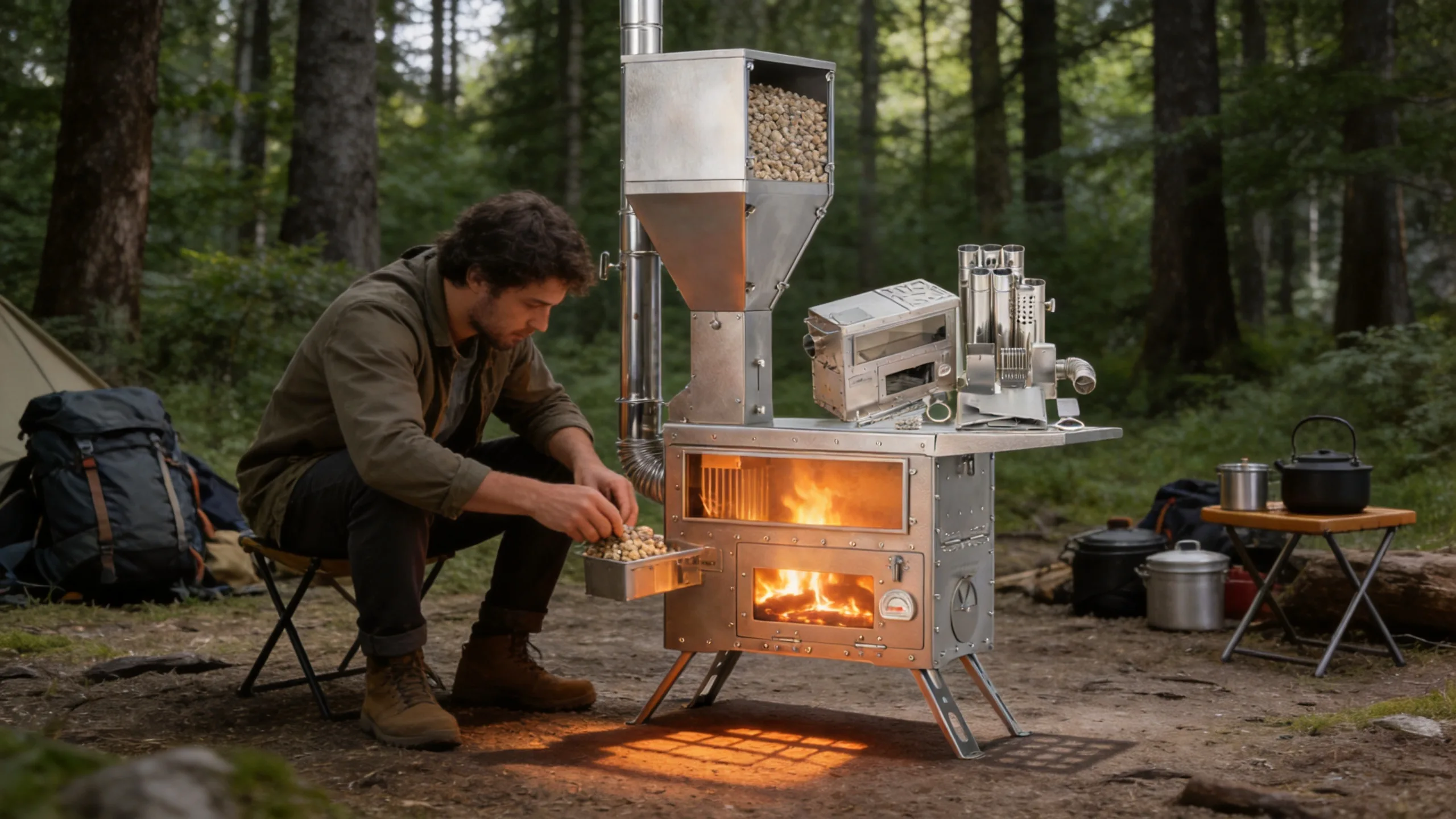
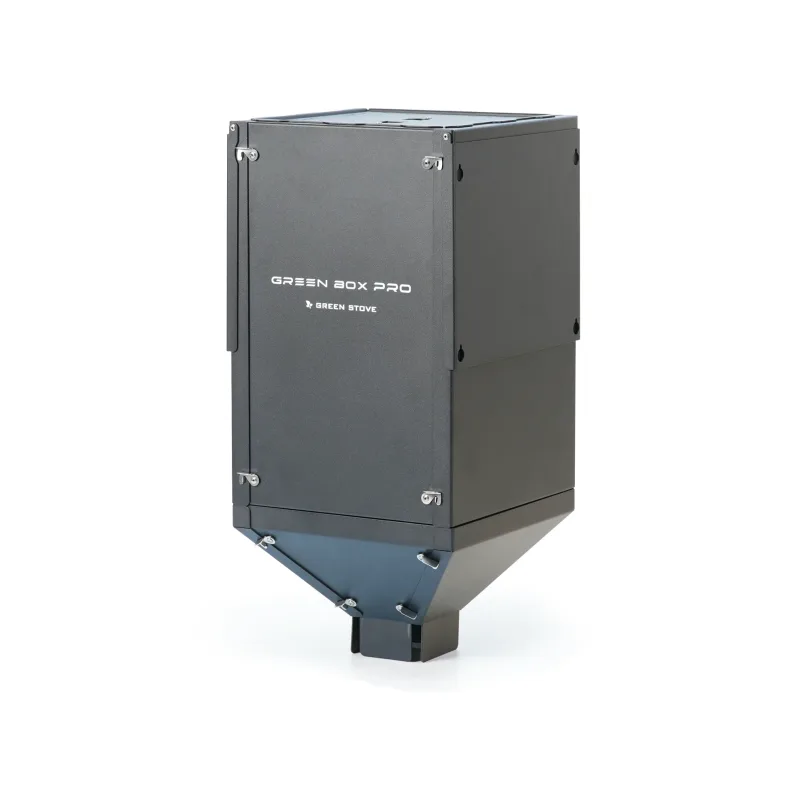
Let’s address the elephant in the room—the “6 hours” claim. In the reference material, it states you get 6 hours from half a 40 lbs bag (which is 20 lbs of pellets). In my testing, this is accurate on a medium feed rate. The stove features a gravity-fed hopper on top. There are no augers or moving parts in the feed mechanism, which is brilliant because in freezing conditions, mechanical augers are prone to jamming. The pellets simply drop down into the burn column as the previous ones are consumed. However, the burn rate is controlled by a digital controller that regulates the draft fan (the exhaust fan), not the feed. By adjusting the airflow, you control the intensity of the fire. On the absolute lowest setting, I achieved a 10-12 hour burn time, similar to what the Nature Hike Dune user reported. On the highest setting, it burns through the 20 lbs in about 3.5 hours, but you are producing serious BTUs to melt snow off your tent roof.
4. The Cooktop Surface (Culinary Capability)
One of the most praised features in the community is the flat top. The Hori 5 offers a massive cooking surface that isn’t just for boiling water. The heat distribution is far more even than a wood stove because the flame doesn’t lick directly under the center. The top plate is thick (approx 5mm) steel, which prevents warping—a common complaint with cheaper titanium stoves that have hinges on the door. You can place a cast iron skillet directly on the surface and sear a steak at high heat, or move it to the edges for a slow simmer. During my winter trips, I was able to bake a small loaf of bread using a Dutch oven on top of the Hori 5 while simultaneously melting snow for water. The cooktop space is roughly 14″ x 14″, which is ample for a two-person camp kitchen.
5. Digital Control Unit (The Brains)
In the world of camping stoves, a digital interface is a rarity. The Hori 5 has a small LED screen unit that attaches magnetically to the side of the stove. This unit connects to a thermocouple inside the burn chamber. You can set a target temperature for the tent (with a remote sensor), and the stove will modulate the fan speed to maintain that temp. This is a luxury feature that is typically found in $5,000 residential pellet stoves. It takes the guesswork out of “damping down” the stove before bed. I set mine to 70°F at 11 PM, and it held that temperature within a 2-degree variance all night, without me waking up.
Pros & Cons: The Honest Breakdown
No product is perfect. Here is my honest assessment based on extended field use.
The Pros (Why you should buy it)
- Exceptional Burn Time: On a low setting, you are looking at 10+ hours of heat from 20 lbs of pellets. This is unmatched by any wood stove that requires manual feeding. It allows you to actually sleep through the night.
- Clean & Dry Heat: The tiered combustion means very little soot. The heat is dry, which cuts through the humidity of a melting snow tent. You won’t get that damp, clammy feeling you get with propane heaters.
- Precision Control: The digital thermostat is not a gimmick. It works. It prevents the “hot flash” effect where the tent gets to 90°F and then drops to 40°F when the fire dies. It maintains a constant, comfortable environment.
- Cooking Capability: The large, flat top is genuinely usable. You can cook a full breakfast while the heat is running. The even heat distribution eliminates hot spots that burn pancakes.
- Low Maintenance Ash Removal: Because it burns so cleanly, ash production is minimal. I only needed to empty the ash tray every 3 days of continuous use. A wood stove requires daily cleaning.
The Cons (The reality check)
- The Power Dependency (Electricity): This is the big one. The fan and controller require 12V DC power. You MUST have a battery bank or a solar setup. If your battery dies, the stove will still burn, but it will not have forced air. In a confined tent, without the exhaust fan, it will smoke. You cannot rely on this stove without a reliable power source (I use a 250Wh power station; it runs the stove for 2 nights on a single charge).
- Fuel Specificity: You can only burn wood pellets. You cannot throw in a split log or pinecones. If you run out of pellets in the backcountry, you are out of luck. You cannot scavenge for fuel like you can with a wood stove.
- The Warping Hinge Concern: Unlike cheaper stoves, the Hori 5 is well built, but the door hinge is a potential failure point. The reference in the Naturehike review about hinges warping applies here to a lesser extent. The door is heavy, and if you drop it shut repeatedly at high temps, the hinge pin can stretch. I mitigated this by being gentle with the door latch.
- Weight & Bulk: At 26 lbs plus the fan and chimney, this is not a backpacking stove. This is for car campers, ice fishermen, or base camp setups. You need a sled or a vehicle to transport it.
- Ash and Dust in Transit: If you don’t empty the ash tray before packing up, you will have a fine black dust coating everything in your truck. The stove is not airtight when you remove the chimney.
Real-World Scenarios: Where the Hori 5 Shines
To give you a full picture, let me walk you through three specific use cases I encountered.
Scenario 1: The “Polar Vortex” Night
Location: Boundary Waters, Minnesota. Temp: -20°F. Tent: Ice Hub 6.
I loaded 18 lbs of pellets into the hopper, set the thermostat to 68°F, and crawled into my sleeping bag. At 4 AM, I woke up because I was too warm—a good problem to have. The internal temp of the tent was a balmy 72°F while the outside wind chill was -35°F. The hopper had about 4 lbs of pellets left. This is the scenario that converts wood stove purists into pellet stove believers.
Scenario 2: The “Quick Setup” Scenario
Location: Driggs, Idaho. Temp: 15°F. Tent: Nature Hike Dune 10.9.
I was setting up camp in a blowing snowstorm. With a wood stove, it takes 20 minutes to get a fire going. With the Hori 5, I plugged in the fan, dumped in a cup of pellets, hit the “Ignite” button on the controller (there is a built-in electric igniter, a feature I forgot to mention earlier), and had a roaring flame in 3 minutes. The igniter is a coil that heats up to 1500°F. This feature alone saves you time and frustration in bad weather.
Scenario 3: The “Cooking Marathon”
Location: High Uintas Wilderness. Temp: 10°F.
I cooked a full Thanksgiving-style dinner on the stove top. I had a pot of stew on the left side, a skillet with cornbread on the right, and a kettle for tea at the back. The heat output did not fluctuate when I opened the door to add pellets, because the hopper feeds continuously. The stability of the cooktop temperature is remarkable compared to a wood stove, where the heat spikes every time you open the firebox.
Verdict: Is it the King of Winter Camping?
Rating: 9.2/10
The Green Stove Hori 5 is not a stove; it is a tactical heating appliance. It bridges the gap between the rustic romance of a wood fire and the reliability of modern HVAC systems. If you are a “hot tent purist” who needs the crackle of a log, this will disappoint you—it feels more like a furnace than a campfire. However, if you are an outdoor enthusiast who values sleep, safety, and efficiency, this is the
![Hori 5 Max Pellet Hot Tent Stove with Oven [Classic Control Version]](https://green-stove.com/wp-content/uploads/2025/10/hori5maxgreenstove002-800x800.webp)
![Hori 5 Max Pellet Hot Tent Stove with Oven [EASY OPERATION VERSION]](https://green-stove.com/wp-content/uploads/2026/09/61b6a5hzqRL._AC_SL1500_-800x800.webp)
![GREEN STOVE Hori 5 All-In-One Gravity Fed Pellet Wood Burning Hot Tent Stove [Classic Control Version]](https://green-stove.com/wp-content/uploads/2025/06/Green-Stove-Hori-5-Pellet-Stove-800x800.webp)