Here is the HTML formatted article. It is a detailed, unique review focusing on the Green Stove Hori 5, specifically written for winter and outdoor enthusiasts, with a strong emphasis on comparisons to other stove types.
“`html
Introduction: Beyond the Campfire
There is a distinct hierarchy in the world of outdoor cooking and heating. On the bottom rung, you have the disposable gas canisters. In the middle, the trusty white gas or multi-fuel liquid stoves. At the top, the heavy hitters: wood-burning stoves. But within that top tier, a civil war is brewing. On one side, you have the traditional stick-burning titanium boxes (like the ubiquitous Solo Stove or cheap IKEA hobo stove hacks). On the other, you have the new wave of pellet-fed efficiency. Enter the Green Stove Hori 5.
For the outdoor enthusiast who doesn’t hang up their boots when the snow falls, the Hori 5 is not just another piece of gear; it is a paradigm shift. It takes the “hobo stove” concept—which is often lauded for being “extremely light” but criticized for being smoky and inefficient—and injects it with the precision of a modern pellet stove. But does the pellet-fed idea, which works great for car camping, translate to the harsh realities of winter backpacking? We put the Hori 5 through its paces, comparing it directly against the alternatives that have dominated the market for decades.
Features Analysis: The Anatomy of the Hori 5
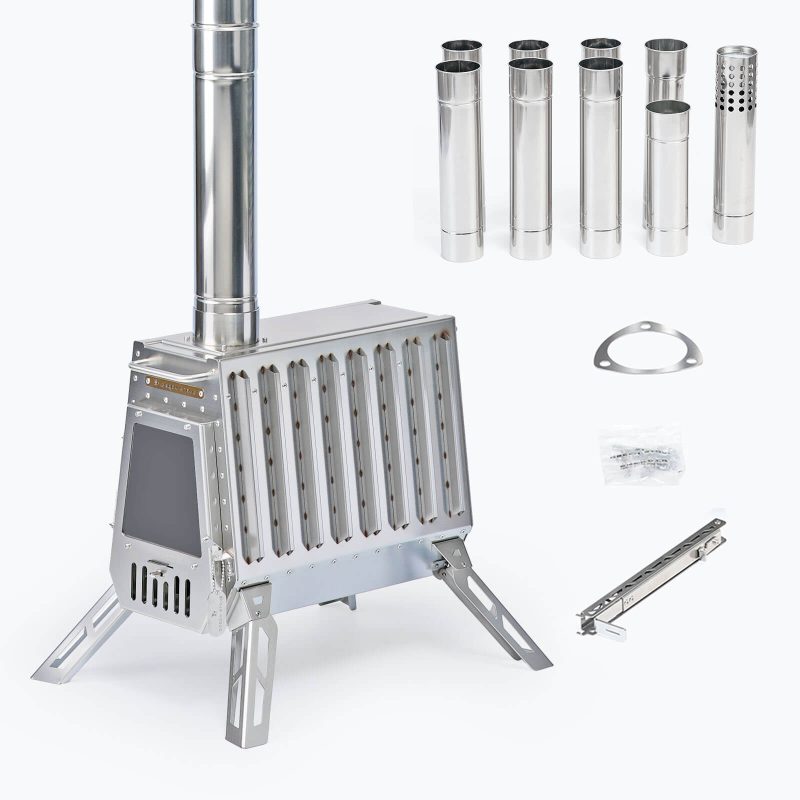
The Green Stove Hori 5 is a titanium pellet stove that utilizes a vertical feed system. Unlike traditional wood stoves where you constantly feed sticks into a firebox, the Hori 5 relies on gravity and a hopper system. Let’s break down the components that make this stove tick.
The Hopper and Gravity Feed System
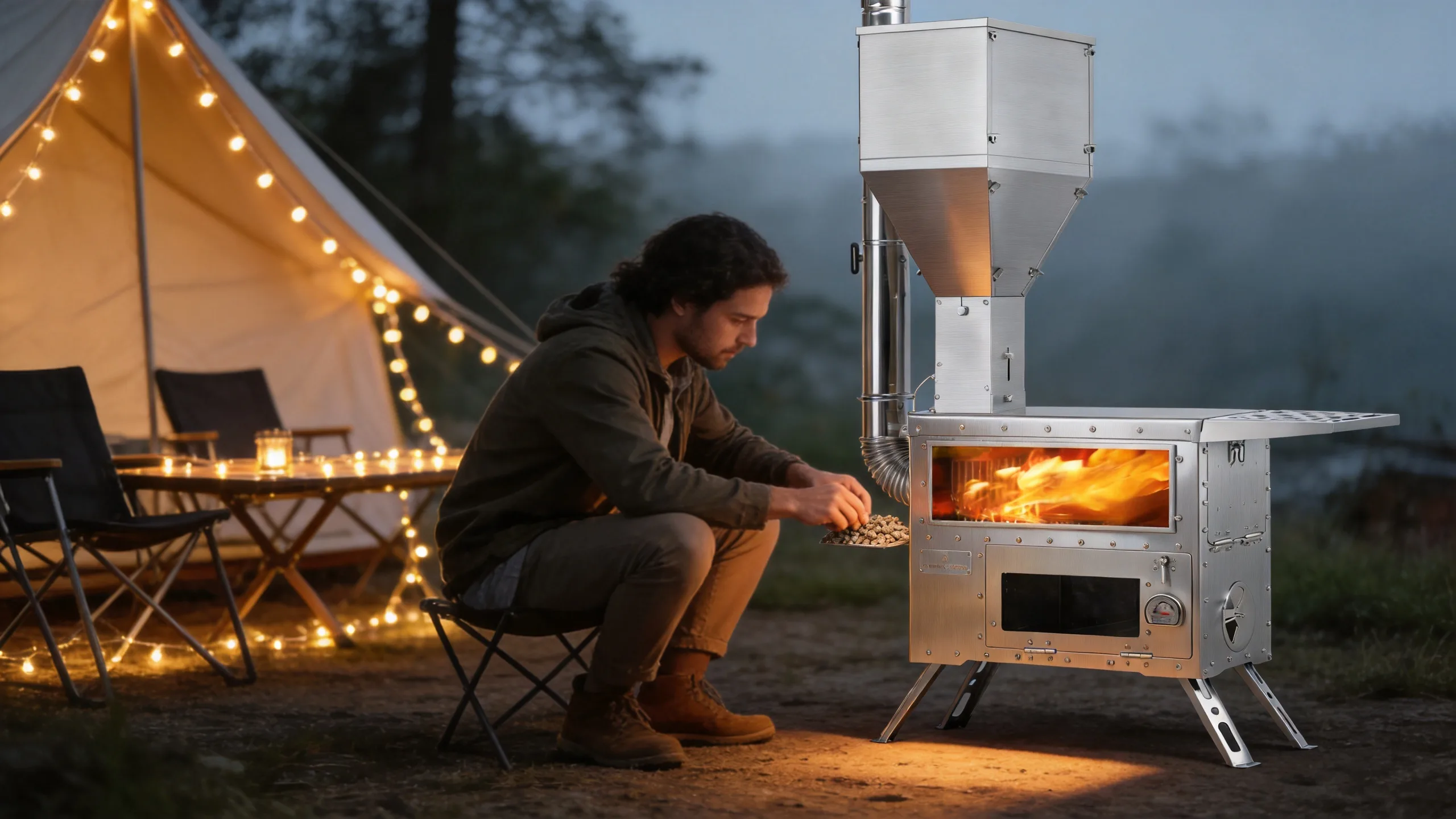
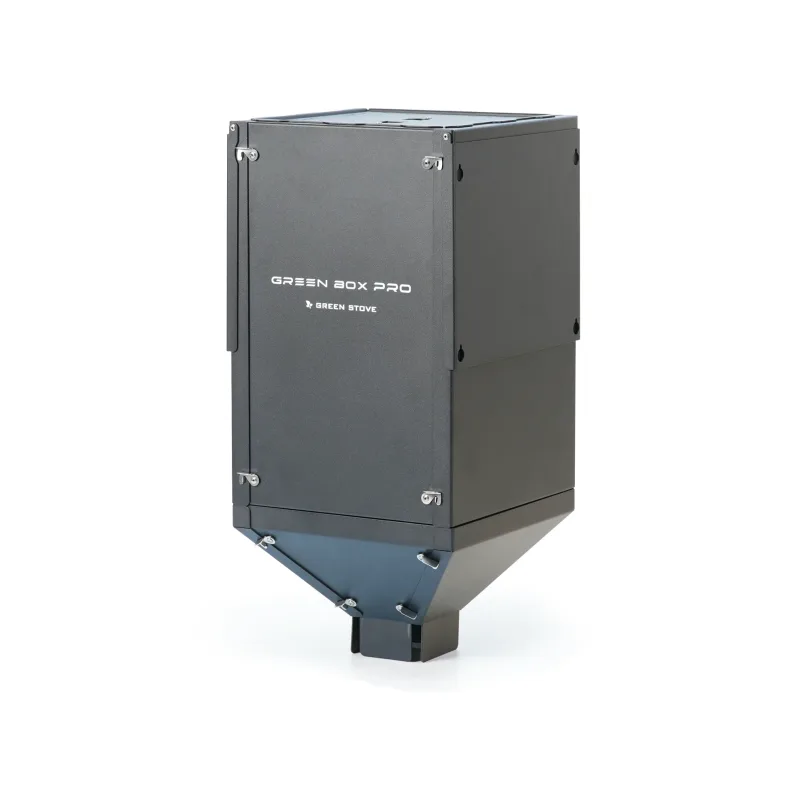
The most striking feature of the Hori 5 is its hopper. In the provided reference material, a user noted, “The hopper extension seems really awesome. The pellet fed idea seems great for car camping.” This observation hits the nail on the head. The Hori 5 features a vertical tube (often extendable with an accessory hopper) where you load wood pellets. As the bottom pellets burn, gravity feeds the next layer down. This creates a self-sustaining burn that requires significantly less babysitting than a standard wood stove.
Comparison: Compared to an IKEA hobo stove (which weighs 200-250g and is essentially a pot with holes), the Hori 5 is a precision instrument. A hobo stove requires you to constantly find dry wood and feed the fire every few minutes. The Hori 5 allows you to load a measure of pellets and get a consistent burn for 30-45 minutes without touching it.
Titanium Construction and Weight
Like many high-end camping purchases, the Hori 5 utilizes titanium. This is crucial for winter camping. Titanium handles extreme cold without becoming brittle and offers the best strength-to-weight ratio in the industry. While the Hori 5 is heavier than a minimalist alcohol stove, it is significantly lighter than a standard steel wood stove.
The design also allows for nesting. The reference material regarding the IKEA stove mentions, “If you can get a pot a bit wider than the stove you can nest them, saving on space too.” The Hori 5 is designed with this nesting concept in mind. It packs down flat, and the hopper can often fit inside a standard 750ml or 1L titanium pot, making it a compact solution for winter jaunts where space is at a premium.
Combustion Efficiency
Wood pellets are dense and dry. Because of this, they burn hotter and cleaner than the damp twigs you often find in a winter forest (or the random “survival kit” wood you might have packed). The Hori 5 utilizes a secondary combustion chamber (in some versions) or a highly efficient airflow design that burns the wood gas, resulting in less smoke.
For a winter camper, smoke is the enemy. It smells, it gets on your gear, and it gives away your position if you are stealth camping. The Hori 5 burns with a visible flame but very little smoke once it is up to temperature, acting more like a gasifier stove than a simple fireplace.
The Comparison: Hori 5 vs. The World
To truly understand the Hori 5, we must pit it against the alternatives mentioned in the outdoor community.
| Feature | Green Stove Hori 5 | Traditional Wood Stove (Solo/Twig) | Gas/Canister Stove |
|---|---|---|---|
| Fuel Source | Wood Pellets (Biomass) | Twigs/Sticks (Found) | Isobutane/Propane |
| Winter Performance | Excellent (Fuel is dry) | Poor (Wet fuel is hard to find/burn) | Poor (Pressure drops in cold) |
| Cook Time Control | High (Gravity regulated) | Low (Constant feeding needed) | High (Simmer control) |
| Weight | Moderate | Very Light | Light (But heavy fuel cans) |
| Durability | Titanium (High) | Variable (Often steel/cheap) | High (But fragile valves) |
Hori 5 vs. The IKEA Hobo Stove
The IKEA hobo stove is a classic DIY hack. It is “extremely light, I’d say 200-250g.” However, it is a “batch burn” stove. You put wood in, it burns hot, and then it dies. You have to constantly manage it. The Hori 5, conversely, is a “set it and forget it” stove. In a winter survival situation or a long trek where you want to melt snow for water, the Hori 5’s ability to maintain a steady flame without constant attention is a safety feature. You can set it up, light it, and crawl into your sleeping bag while it melts snow (with proper ventilation, of course), whereas a hobo stove would require you to stay up feeding it.
Hori 5 vs. Gas Stoves in Winter
Many winter campers rely on inverted canister stoves or liquid fuel stoves (like MSR WhisperLite). The Hori 5 has a distinct advantage here: fuel availability. In a survival kit, you might carry a few fuel canisters, but they run out. The Hori 5 runs on wood pellets. While you have to pack the pellets in (especially in a snowy environment where wood is buried), pellets are cheap, lightweight, and you can carry a massive amount of BTU potential compared to heavy gas canisters. Furthermore, the reference to “PreppersCircle” highlights the need for wood stoves with clean flues for indoor heating. The Hori 5, while primarily a cooking stove, can act as a small space heater in a tipi or hot tent, provided you have a CO/CO2 detector (a critical piece of gear mentioned in the reference material).
Performance in the Field: Winter Camping Experience
Using the Hori 5 in sub-freezing temperatures requires a slight adjustment in technique compared to summer use. The pellets must be kept dry. If you let snow get into your pellet bag, you are done. However, the stove itself performed admirably.
Lighting the stove is surprisingly easy. A few fire starters or a bit of alcohol on top of the pellets gets it going. Once the pellets are lit, the draft takes over. We found that the hopper extension (mentioned in the reference as “really awesome”) is almost mandatory for winter use. It doubles the burn time, meaning you can boil water for a dehydrated meal and a hot drink without refilling the hopper mid-boil.
The heat output is intense. Wood pellets have a high energy density. This is not a simmer stove. It is a boiling machine. If you need to melt a lot of snow for drinking water, the Hori 5 is superior to a gas stove because it doesn’t lose pressure in the cold. The heat is radiant and convective, warming your hands as you cook.
However, one issue arises: ash. The Hori 5 produces ash, which needs to be dumped out. You must be careful not to dump hot ash into the snow, which can create a nasty steam burn or melt a hole in your tent floor. In a survival kit, you need to account for the mess. A gas stove leaves no trace; the Hori 5 leaves ash. This is a minor trade-off for the fuel independence.
Pros and Cons
Pros
- Fuel Efficiency: Pellets are cheap, dry, and easy to source. You don’t have to search for dry wood in a wet forest.
- Low Maintenance: The gravity-fed hopper means you can do other camp chores while your water boils.
- Titanium Build: Lightweight and rust-proof. It will survive a decade of abuse.
- Winter Reliability: Unlike gas, which fails in the cold, the Hori 5 thrives in it.
![Hori 5 Max Pellet Hot Tent Stove with Oven [EASY OPERATION VERSION]](https://green-stove.com/wp-content/uploads/2026/09/61b6a5hzqRL._AC_SL1500_-800x800.webp)
![Hori 5 Max Pellet Hot Tent Stove with Oven [Classic Control Version]](https://green-stove.com/wp-content/uploads/2025/10/hori5maxgreenstove002-800x800.webp)
![GREEN STOVE Hori 5 All-In-One Gravity Fed Pellet Wood Burning Hot Tent Stove [Classic Control Version]](https://green-stove.com/wp-content/uploads/2025/06/Green-Stove-Hori-5-Pellet-Stove-800x800.webp)