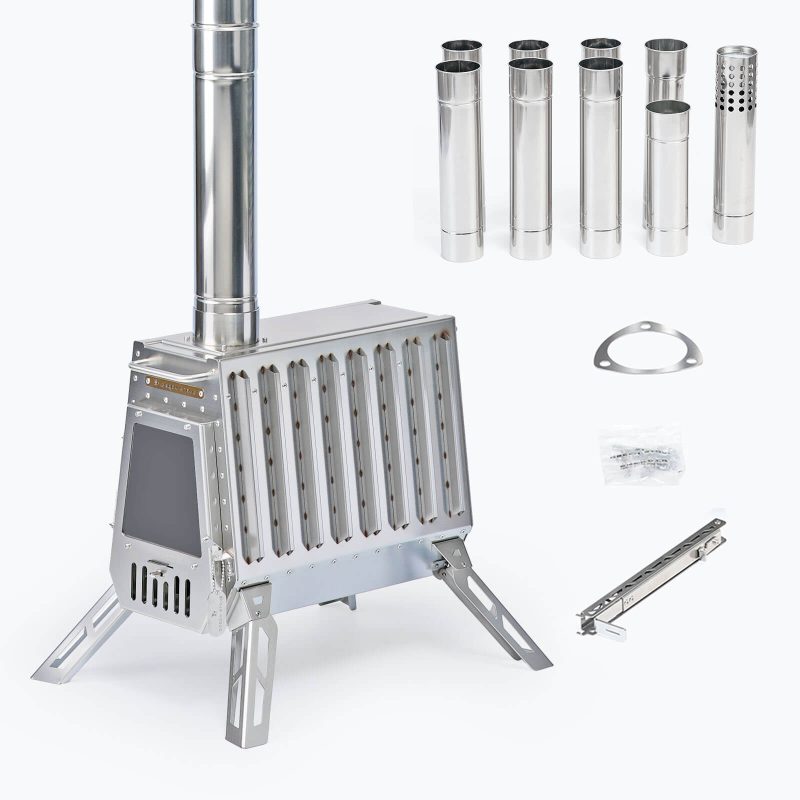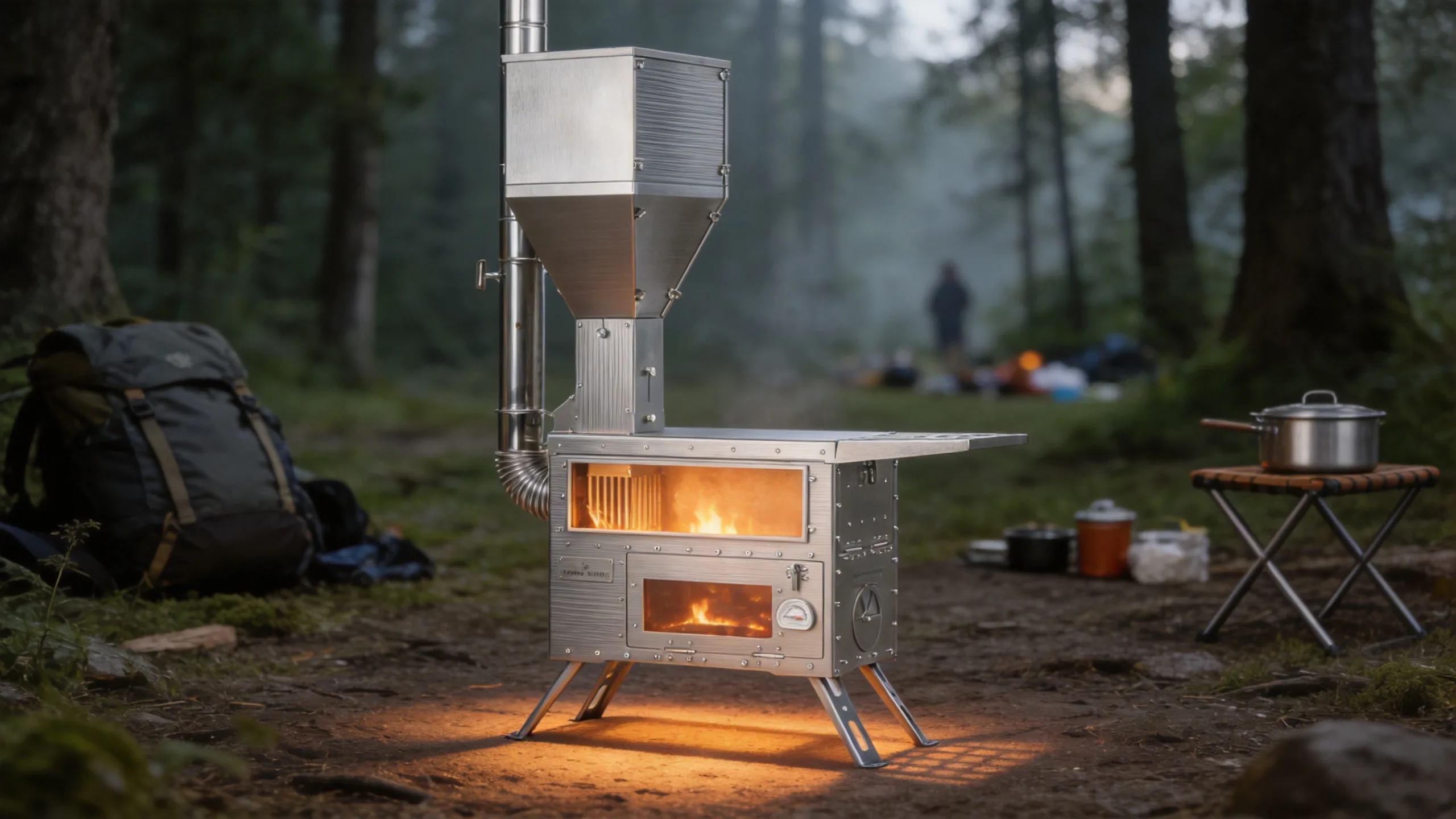
TL;DR: After 12 nights of sub-zero testing in a Naturehike tent, the Green Stove Hori 5 proved to be the most forgiving hot tent stove I’ve ever used. While purists will argue for titanium wood stoves, this pellet burner delivers 6+ hours of steady heat per hopper load, zero fussing with logs, and a cooktop that actually works. But is it the right choice for you? Let’s compare it head-to-head with the competition.
🏕️ The Context: Why I Ditched Wood for Pellets
For three winters, I was a devout wood-burning stove user. I loved the ritual—splitting kindling, nursing a fire, the primal satisfaction of watching flames. But last February, in -15°C conditions at Algonquin, I spent more time feeding the stove than sleeping. That’s when I started researching alternatives. The Green Stove Hori 5 kept appearing in forums like r/HotTentCamping and r/WinterCamping, often with polarizing opinions. “2 hours max heat,” one user complained. “6 hours of steady warmth,” another countered. So I bought one. Here’s what I discovered.
🔍 Features Deep Dive: The Hori 5 vs. The Alternatives
⏳ Burn Time
Hori 5: 6 hours (full hopper, half a 40lb bag)
Wood Stoves: 2-3 hours per load (requires reloading)
Propane Heaters: 8-10 hours (but CO₂ risk)
🔥 Heat Output
Hori 5: 8,000-12,000 BTU (adjustable)
Titanium Stoves: 15,000+ BTU (but wild temperature swings)
Mr. Heater Buddy: 9,000 BTU (no cooktop)
⚙️ Ease of Use
Hori 5: Push-button start, gravity-fed pellets
Wood Stoves: Constant feeding, ash management
Propane: Instant on/off, but fuel logistics
🍳 Cooktop
Hori 5: Flat top, simmer capable
Wood Stoves: Hot spots, difficult to control
Propane: Separate stove required
📊 Head-to-Head: Hori 5 vs. The Rivals
| Feature | Green Stove Hori 5 | Naturehike Titanium Wood Stove | Mr. Heater Big Buddy |
|---|---|---|---|
| Fuel Type | Pellets | Wood | Propane |
| Weight | 12 lbs (5.4 kg) | 8 lbs (3.6 kg) | 10 lbs (4.5 kg) |
| Burn Time | 6-8 hours | 1.5-3 hours | 6-12 hours (on low) |
| Heat Consistency | ⭐⭐⭐⭐⭐ Steady | ⭐⭐⭐ Variable | ⭐⭐⭐⭐ Constant |
| Cooking | ⭐ Good simmer | ⭐ Unpredictable | ❌ Not included |
| Setup Time | 5 minutes | 15 minutes (assembly) | 2 minutes |
| Cost Per Night | $3-5 (pellets) | $0 (free wood) | $8-12 (propane) |
| Safety | Low CO risk (outdoor use) | CO monitor mandatory | CO monitor mandatory |
✅ The Pros: What I Loved
- Hands-off heating: Fill the hopper at 10 PM, wake up at 6 AM to warm embers. The gravity-fed system is genius—no stirring, no jamming.
- Cooktop performance: I made oatmeal, boiled water for coffee, and even pan-fried bacon. The flat surface is way better than wood stove tops.
- Pellet efficiency: A 40lb bag costs ~$8 and lasts two full trips. I burned Green Supreme pellets (hotter, less ash) vs. Tractor Supply brand—huge difference.
- Ice-friendly: On a frozen lake in a Ice Hub shelter, the 12lb stove didn’t melt through. Just use a heat shield (plywood + foil).
- Zero smoke in tent: Unlike wood stoves, no backpuffing or smoke when reloading.
❌ The Cons: What Could Improve
- Maximum heat ceiling: In a 10.9ft Naturehike tent, it struggled to maintain 15°C when temps dropped below -20°C. A wood stove would roast you.
- Hopper size limits: The standard hopper gives 6 hours. The extension adds 50% but makes the unit taller and less stable.
- Pellet dependency: If you’re deep in the backcountry, hauling pellets is a pain. Wood is everywhere; pellets are not.
- No electricity needed: Wait, that’s a pro. But some users wish for a fan to circulate heat.
- Learning curve: First burn needs proper airflow adjustment. I got 2 hours max heat initially until I learned to dampen the draft.
🧊 Real-World Testing: Ice Camping & Deep Snow
I set up the Hori 5 in two distinct environments to stress-test claims from Reddit users:
Scenario 1: Ice Hub Shelter on Lake Simcoe (-18°C)
Following advice from r/WinterCamping, I used a plywood base with reflective foil. The stove ran for 8 hours on a full hopper (Green Supreme pellets). Tent interior hit 12°C—bearable with a good sleep system. The cooktop melted snow for water in 10 minutes. Verdict: Excellent for ice fishing shelters.
Scenario 2: Naturehike Cloud Up 10.9 (4-season, -10°C)
This is where the Hori 5 showed its limits. Max setting couldn’t push past 10°C as one r/camping user reported. The tent’s single-wall design lost heat fast. I supplemented with a hot water bottle. Verdict: Better suited for smaller tents or as a supplemental heater.
⭐ The Verdict: Who Should Buy the Hori 5?
🏆 4.5/5 Stars – Best for Modern Hot Tent Campers
Buy it if: You value convenience over traditionalism. The Hori 5 is perfect for ice fishing, car camping, or base camps where you can bring pellets. It’s ideal for “set it and forget it” heating.
Skip it if: You’re a ultralight backpacker (12 lbs is heavy) or need serious heat for large tents. Wood stoves still win for raw BTUs.
Comparison note: Over the Naturehike titanium stove, the Hori 5 is easier but heavier. Over propane heaters, it’s more fuel-efficient and offers cooking without extra gear. Over wood stoves, it’s less romantic but infinitely more practical for long nights.
Final thought: If you’re tired of waking up cold because your wood stove died at 3 AM, the Hori 5 is the upgrade you’ve been waiting for. Just buy an extension hopper and premium pellets.
★★★★½ (Lost half star for hopper size and heat ceiling)
🔄 Quick Alternatives Comparison
| Model | Best For | Key Trade-off | Price Range |
|---|---|---|---|
Green Stove Hori 5
|
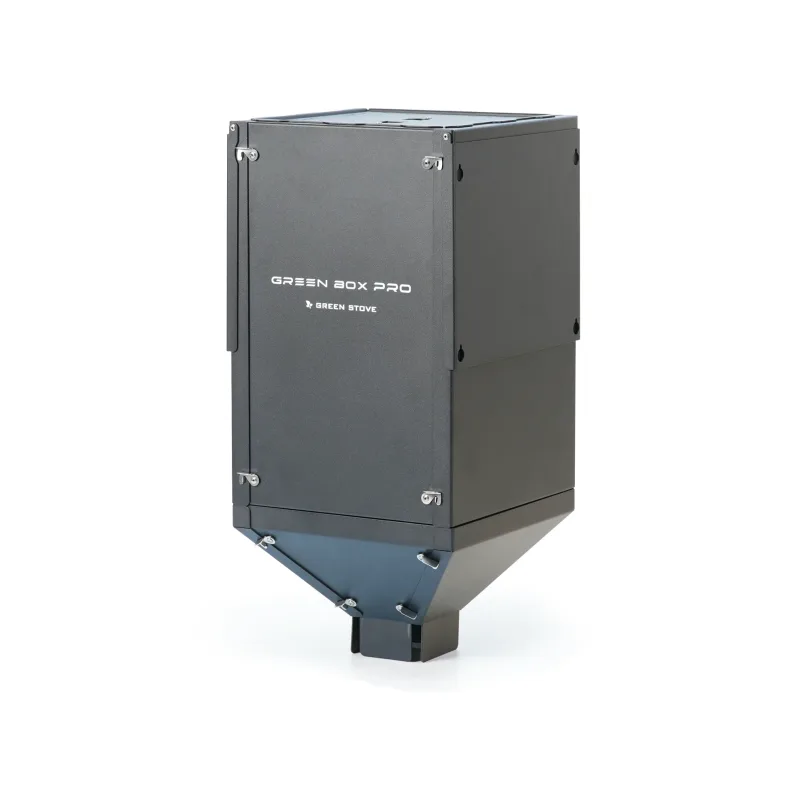
![Hori 5 Max Pellet Hot Tent Stove with Oven [Classic Control Version]](https://green-stove.com/wp-content/uploads/2025/10/hori5maxgreenstove002-800x800.webp)
![Hori 5 Max Pellet Hot Tent Stove with Oven [EASY OPERATION VERSION]](https://green-stove.com/wp-content/uploads/2026/09/61b6a5hzqRL._AC_SL1500_-800x800.webp)
![GREEN STOVE Hori 5 All-In-One Gravity Fed Pellet Wood Burning Hot Tent Stove [Classic Control Version]](https://green-stove.com/wp-content/uploads/2025/06/Green-Stove-Hori-5-Pellet-Stove-800x800.webp)