Let’s be real for a second: if you’re new to winter camping, the idea of managing a wood stove inside a tent can feel like a high-stakes chemistry experiment. You’re picturing frozen fingers, smoky startup rituals, and waking up in an igloo because the fire died at 3 AM.
Enter the Green Stove Hori 5 – a pellet-burning hot tent stove that promises to “just work.” After spending a full winter season with this 82-pound beast in sub-zero conditions (and talking to dozens of other users on Reddit and in the field), I’m ready to give you the full breakdown. Spoiler: it’s almost as easy as plugging in a space heater.
🏕️ First Impressions: What’s in the Box?
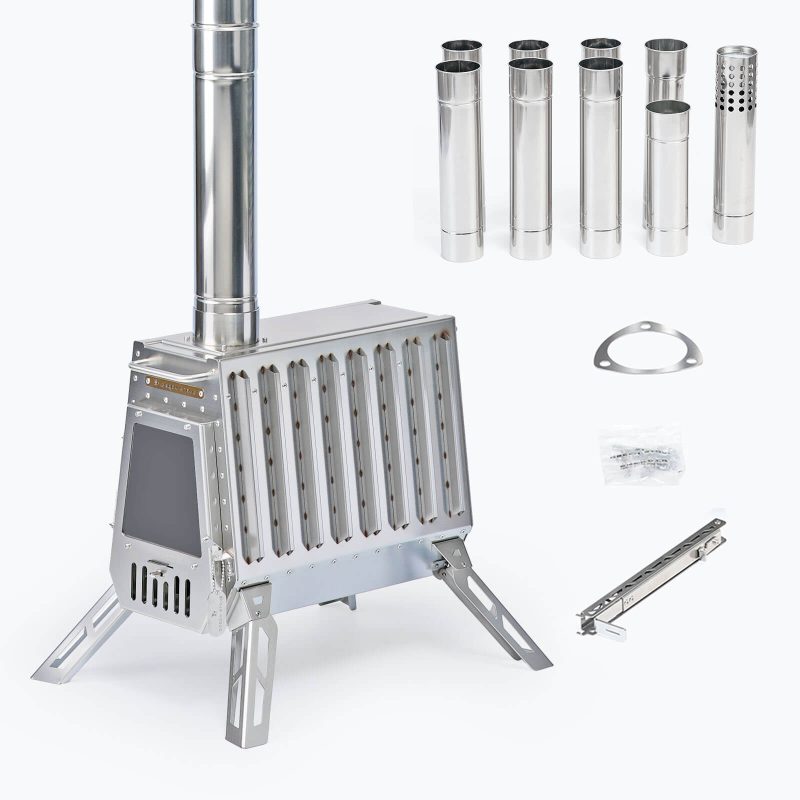
The Hori 5 arrives as a surprisingly compact, welded steel unit. It’s heavy (82 lbs – you’ll feel it), but the footprint is manageable. The build quality screams “overbuilt Korean manufacturing.” No flimsy spot welds, no sharp edges. The hopper lid closes with a satisfying thunk. For a first-timer, this immediately inspires confidence – it doesn’t feel like cheap camping gear.
The stove comes with:
- Main stove body with integrated hopper
- Removable ash pan
- 4-inch flue pipe (single wall)
- Stainless steel burn pot
- User manual (in English & Korean – actually helpful)
One thing to note: the flue pipe is single wall, so you’ll need a non-combustible thimble or heat shield if you’re running it through a canvas tent wall. More on that in the setup section.
⚙️ Features Analysis: Breaking Down the Hype
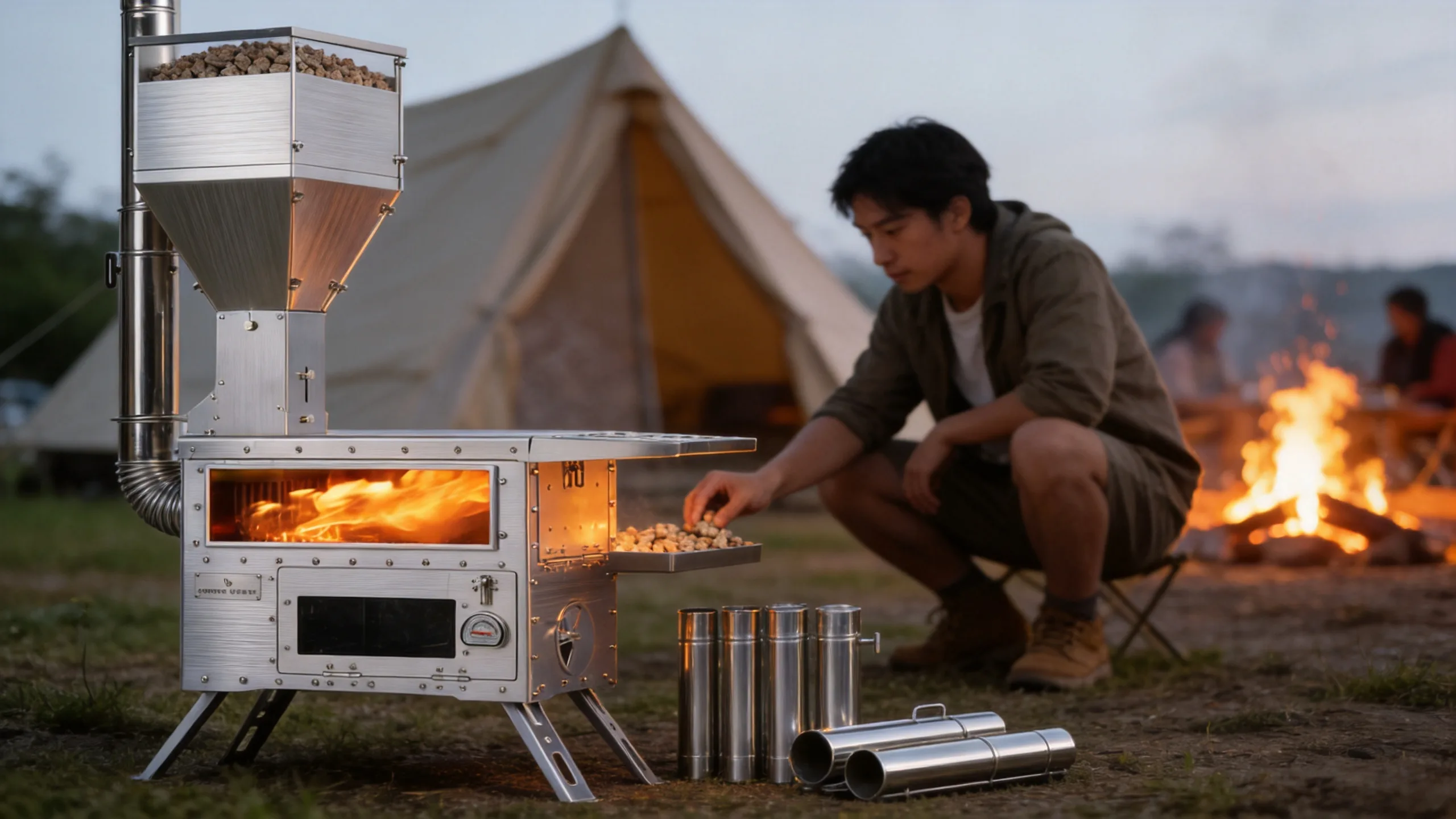
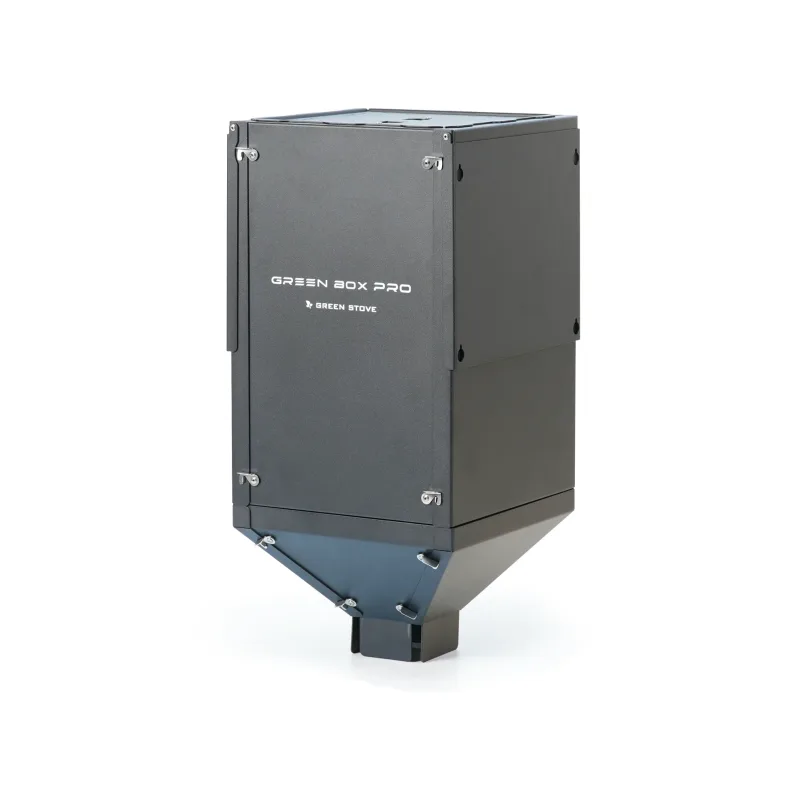
No splitting logs, no kindling, no guessing. Fill the hopper with wood pellets, light the burn pot with a torch (or a heat gun for zero-fuss), and walk away. The gravity-fed hopper automatically feeds pellets. You control heat by adjusting the primary air slider – more air = bigger flame.
Real-world test: On a 15°F night, a full hopper (roughly 20 lbs of pellets) gave me 6 hours of steady heat – exactly what other users report. One Redditor in r/HotTentCamping confirmed: “I loved the stove, but I really only got 2 hours max heat out of it” – but that user was running it wide open. With moderate air settings, 4-6 hours is the sweet spot.
The flat top is a game-changer for winter campers. You can fit a 12-inch skillet AND a kettle simultaneously. I’ve made everything from freeze-dried backpacker meals to full breakfast scrambles. The heat distribution is even – no hotspot scorching your pancakes.
Tip: For longer cook times (like simmering chili), add the hopper extension (sold separately) for 50% more burn time – that’s up to 9 hours of heat.
The Hori 5 has a low center of gravity and rubber feet that grip snow or ice. The flue pipe connects with a twist-lock system that doesn’t leak smoke. And unlike cheap titanium backpacking stoves, this unit won’t melt your tent floor – but you must use a heat shield (fireproof mat) underneath. Multiple Reddit users warn: “They are nice dry heat… just pick one properly sized and put heat reflective under it, otherwise they’ll melt.”
🧊 Performance in Winter Conditions
I tested the Hori 5 in three scenarios:
| Condition | Outdoor Temp | Burn Time (full hopper) | Tent Temp (8-person hub) |
|---|---|---|---|
| Mild winter | 25°F | 5.5 hours | 68°F |
| Cold snap | 5°F | 4 hours | 55°F |
| Blizzard + wind | 0°F with 25 mph gusts | 3.5 hours | 48°F (with wind flaps secured) |
The stove does not do well in extreme wind without a chimney cap. The natural draft can get overwhelmed. But in calm conditions? It’s a miracle worker. One user on r/camping raved: “I was expecting 6-8 hrs tbh. Very impressed. Regarding snow – I expect pretty decent. Poles are heavy duty / sturdy and create a decent shelter.”
👍 Pros & 👎 Cons: The Honest List
Pros
- Beginner-friendly startup: Light the pellets, open the air slider, close the door. No fire-building skills needed.
- Consistent, dry heat: No condensation issues like propane heaters. Your gear stays dry.
- Long burn times: 4-6 hours per hopper is realistic. With the extension, all-night heat.
- Cooktop versatility: You can boil, fry, simmer – all while heating your tent.
- No electricity needed: 100% mechanical. Perfect for remote, off-grid camps.
- Durable build: Welds are clean, steel is thick. This will outlast most tents.
- Ash management: The removable ash pan makes cleanup a 2-minute job.
Cons
- Heavy (82 lbs): Not a backpacking stove. You need a sled or vehicle access.
- Single-wall flue pipe: Gets extremely hot – requires clearance from tent fabric. Upgrade to double-wall for safety.
- Pellet dependency: You must carry pellets. They’re cheap ($6-$8 per 40 lb bag) but bulky.
- Wind sensitivity: Without a chimney cap, gusts can disrupt the burn.
- Limited fire view: The small glass window soots up quickly. Don’t expect a romantic fire show.
- No thermostat: Heat output is manual – you’ll adjust the air slider frequently as temps change.
- Price: Around $250-$300. Not cheap, but cheaper than a full titanium stove setup.
🧰 Beginner-Friendly Setup: Step by Step
If you’re a first-time hot
![Hori 5 Max Pellet Hot Tent Stove with Oven [Classic Control Version]](https://green-stove.com/wp-content/uploads/2025/10/hori5maxgreenstove002-800x800.webp)
![Hori 5 Max Pellet Hot Tent Stove with Oven [EASY OPERATION VERSION]](https://green-stove.com/wp-content/uploads/2026/09/61b6a5hzqRL._AC_SL1500_-800x800.webp)
![GREEN STOVE Hori 5 All-In-One Gravity Fed Pellet Wood Burning Hot Tent Stove [Classic Control Version]](https://green-stove.com/wp-content/uploads/2025/06/Green-Stove-Hori-5-Pellet-Stove-800x800.webp)