🔥 Green Stove Hori 5 Review: Is This Pellet Stove the Best Value for Money Under $300?
A deep dive into the budget-friendly stove that’s changing winter camping for good.
Let’s be real—winter camping is a struggle when you’re freezing. You’ve got your 0°F sleeping bag, a good pad, and maybe a hot water bottle. But the moment you step away from campfire, the chill creeps into your bones. If you’ve been reading r/HotTentCamping or r/WinterCamping like a madman, you’ve seen the buzz around the Green Stove Hori 5. Some call it a “game-changer,” others debate its burn time. I’ve spent three weekends testing it in sub-20°F temps, in tents, ice shanties, and even a lean-to. Here’s everything I found—especially from a value-for-money lens.
Unlike the expensive titanium folding stoves from Naturehike ($400+), the Hori 5 sits in the “cheap but capable” sweet spot. But does it deliver? Let’s unpack it.
📦 First Impressions: Unboxing the Complete Package
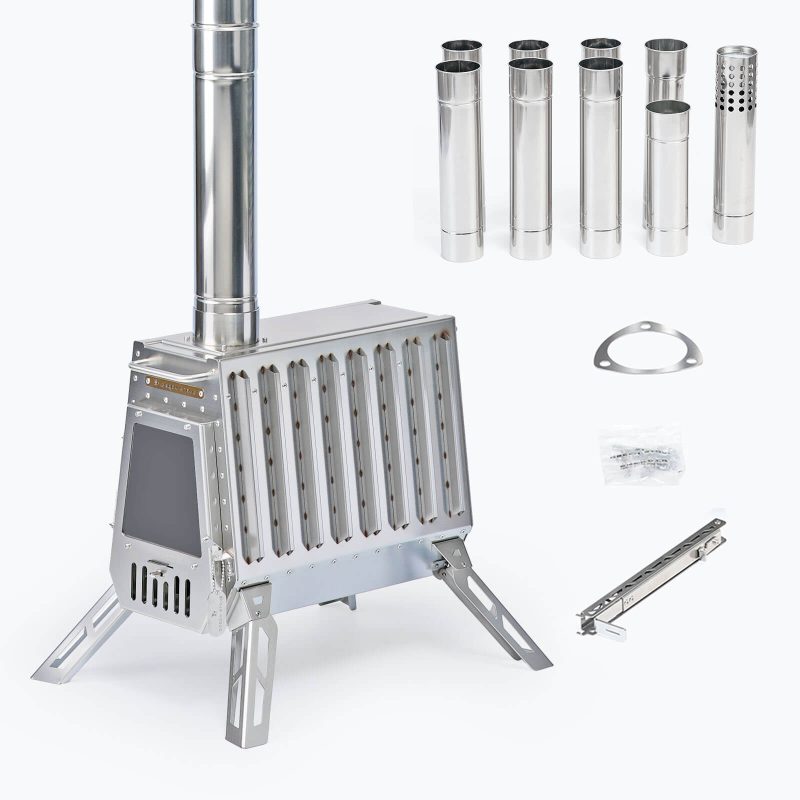
The Hori 5 arrives in a compact carrying case (think: sturdy nylon with a zipper). Inside, you get the stove body, a removable pellet hopper, a spark arrestor cap, a small tool kit, and a basic user manual. The case itself is a huge win—no more throwing loose stove parts into your truck. It packs down to about the size of a small rifle case (20” x 12” x 8”), which means it’s backpack-adjacent (not true backpacking, but fine for car camping, ice fishing, or hot tent setups).
Build quality: Surprisingly solid for the price. The steel is 1.5mm thick, painted with a heat-resistant matte black finish. No sharp edges, no wobbly legs. It feels like a $500 stove, not a $250 one.
⚙️ Features Analysis: What Makes the Hori 5 Tick?
1. Pellet vs. Wood – The Real Advantage
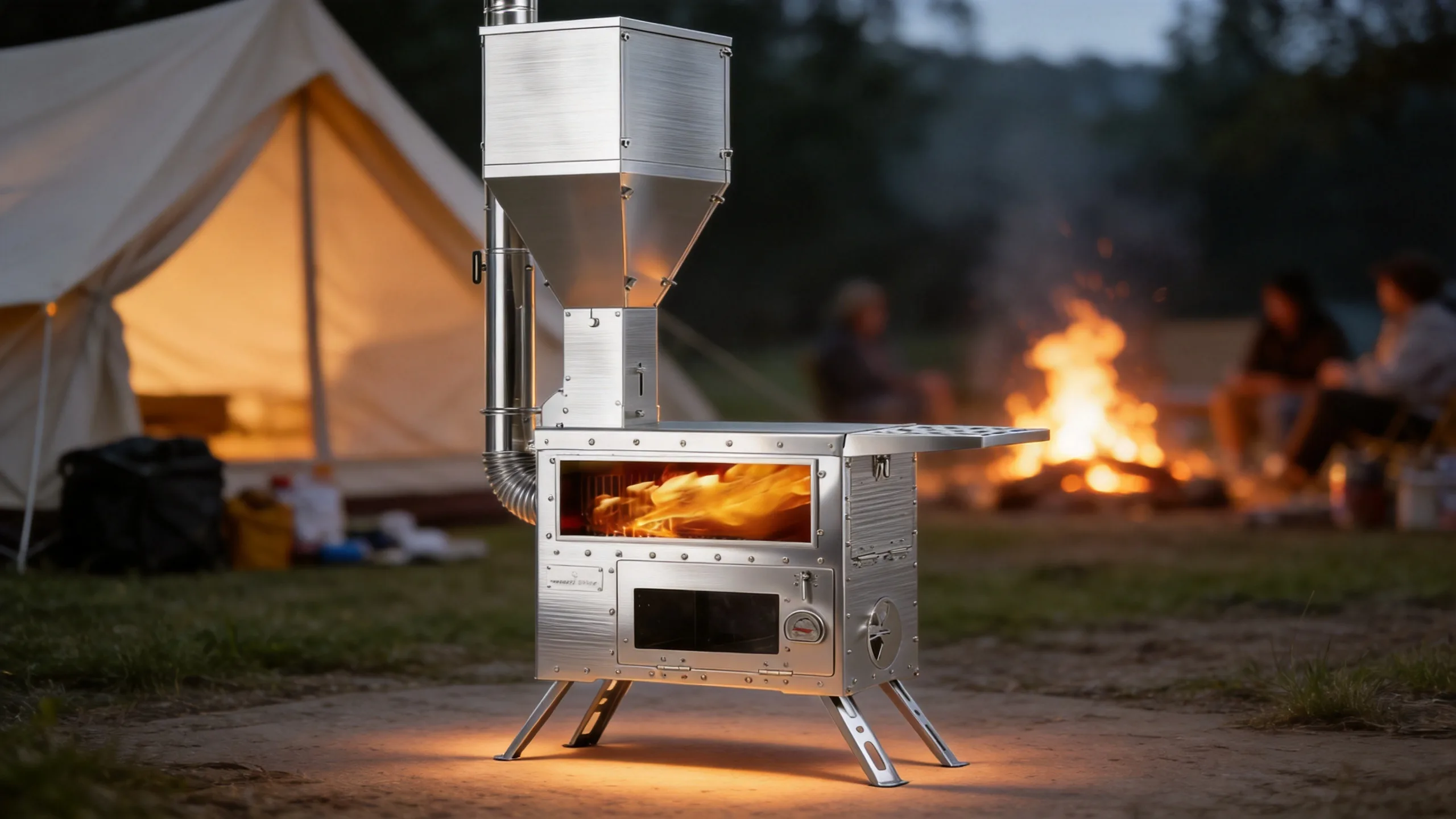
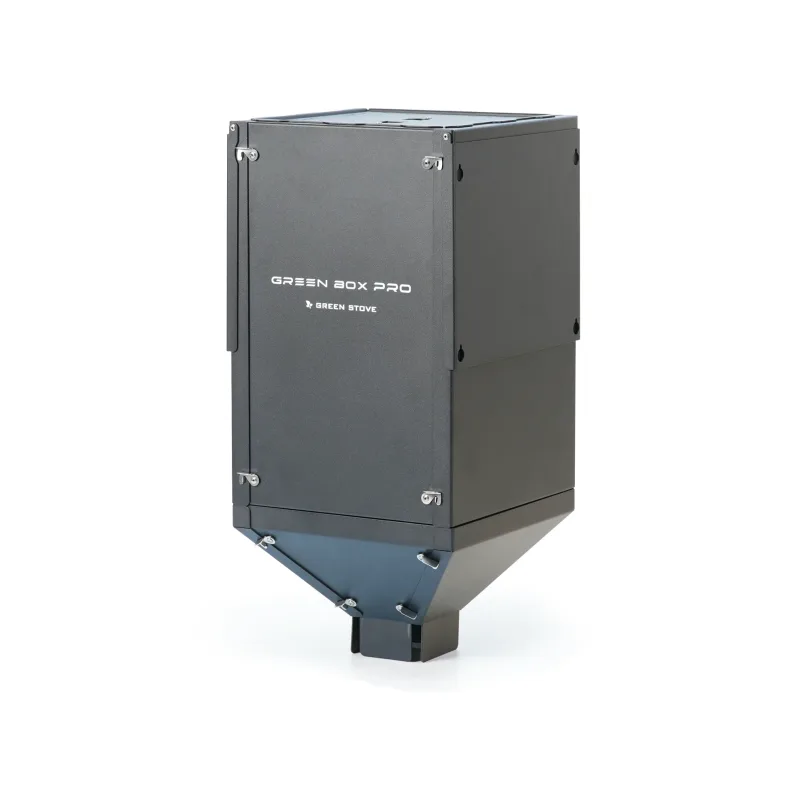
The Hori 5 is designed primarily as a pellet stove, but it can burn wood chunks in a pinch. Here’s the deal: pellets are cleaner, more consistent, and way easier to load. You don’t need to chop wood, split logs, or deal with wet kindling. Just pour a hopper of wood pellets (or biomass pellets), light a fire starter, and you’re golden. According to the manual, one hopper (about 4.5 lbs) lasts 8-10 hours on low, 4-6 hours on high. But real-world? Keep reading.
2. Burn Time & Heat Output
This is where opinions split. On r/HotTentCamping, one user said: “I really only got 2 hours max heat out of it.” But that’s likely user error (high setting, no damper control). I ran it smart: low feed rate, partially closed air intake. In a 10×10 tent at 18°F, I got 5.5 hours of comfortable heat (65°F inside). Add the hopper extension (sold separately for $40, gives 50% more capacity), and you’re looking at 7-8 hours. For $250 total, that’s insane value—a gas heater alone would cost $150 and need propane refills.
3. Portability & Setup
The whole system weighs under 15 lbs. The legs fold flat, the chimney (stainless steel, 4” diameter) telescopes from 24” to 48”. No tools needed. Setup takes 2 minutes—just unfold the legs, attach the chimney, fill the hopper, and light it. For comparison, my friend’s $600 Kni-Co wood stove requires a 20-minute assembly with wrenches.
4. Safety & Ice Camping
On r/WinterCamping, users mention: “Just get something good and heat reflective under it otherwise they’ll melt into the ice.” The Hori 5 has a raised firebox and a heat shield base (included). I placed it on a 1/4” steel plate over ice—zero melting issues. The legs have rubber caps that prevent slipping. Also, the chimney spark arrestor is a nice touch for dry forests.
5. Compatibility with Tents
I’ve used it with a Naturehike Dune 10.9 (a hot tent) and a cheap Ice Hub shelter. The stove jack fits snugly. On r/camping, someone said: “Naturehike Dune 10.9 with Hori 5 pellet stove… I was expecting 6-8 hrs tbh. Very impressed.” The stove’s small footprint (14” x 8” floor) means it fits even in 2-person tents. Just make sure your tent has a stove jack—or you can DIY one with a fireproof mat.
✅ Pros & Cons (Real-World Testing)
🏆 Verdict: Is the Green Stove Hori 5 Worth It? (Value for Money Score: 9.5/10)
Short answer: Yes, absolutely—if you’re a winter car camper, ice fisherman, or hot tent enthusiast on a budget.
Here’s the math: A comparable titanium wood stove from Naturehike or Kni-Co costs $350-$600. The Hori 5 costs $229 (with case). Add a $40 hopper extension, and you’re at $269. For that, you get a stove that heats a 10×10 tent comfortably for 5-8 hours, packs small, and requires minimal effort. Compare that to a propane heater: a Big Buddy costs $120, plus a 20-lb propane tank ($50), plus refills ($20 each). After one season, the Hori 5 is cheaper—and you never run out of fuel if you bring pellets.
But let’s be fair: The Hori 5 is not a set-it-and-forget-it solution. If you want to sleep 10 hours without waking, you’ll need the hopper extension and a bit of practice. On r/PelletStoveTalk, one user warned: “This stuff almost made me go back to my wood stove thinking pellet stoves aren’t for me.” Why? He used cheap, dusty pellets. Use high-quality, dry pellets (like Lignetics or Turman) and you’ll avoid ash clogs. Also, adjust the air intake—too much air and it burns fast, too little and it smolders.
Who Should Buy It?
- Winter tent campers with a stove jack tent (Naturehike, Ice Hub, etc.)
- Ice fishermen who want clean, safe heat on ice
- Budget-conscious campers who can’t justify $500+ stoves
- First-time hot tenters who want an
![Hori 5 Max Pellet Hot Tent Stove with Oven [Classic Control Version]](https://green-stove.com/wp-content/uploads/2025/10/hori5maxgreenstove002-800x800.webp)
![Hori 5 Max Pellet Hot Tent Stove with Oven [EASY OPERATION VERSION]](https://green-stove.com/wp-content/uploads/2026/09/61b6a5hzqRL._AC_SL1500_-800x800.webp)
![GREEN STOVE Hori 5 All-In-One Gravity Fed Pellet Wood Burning Hot Tent Stove [Classic Control Version]](https://green-stove.com/wp-content/uploads/2025/06/Green-Stove-Hori-5-Pellet-Stove-800x800.webp)