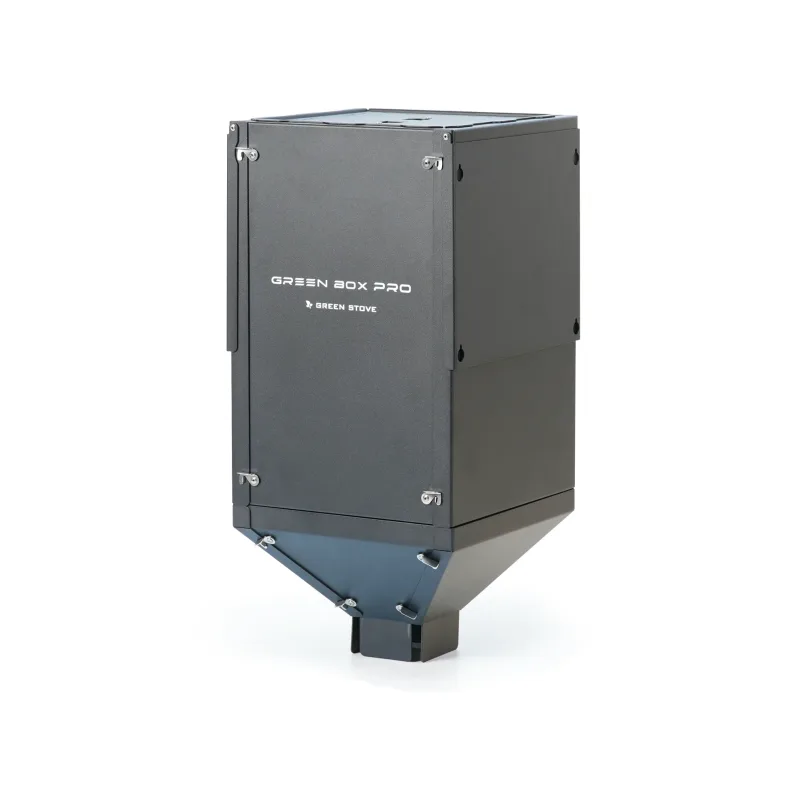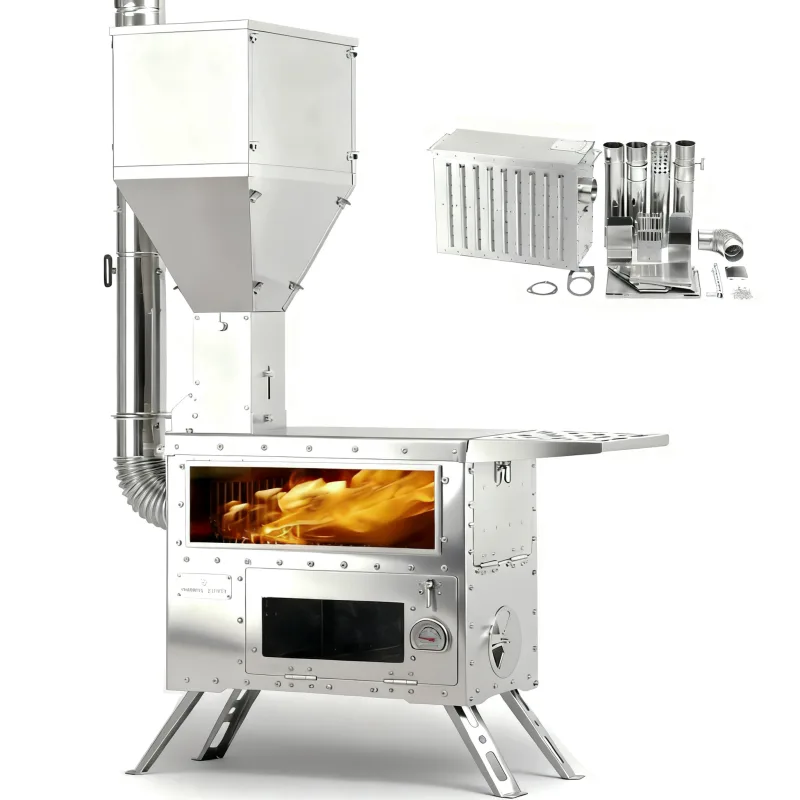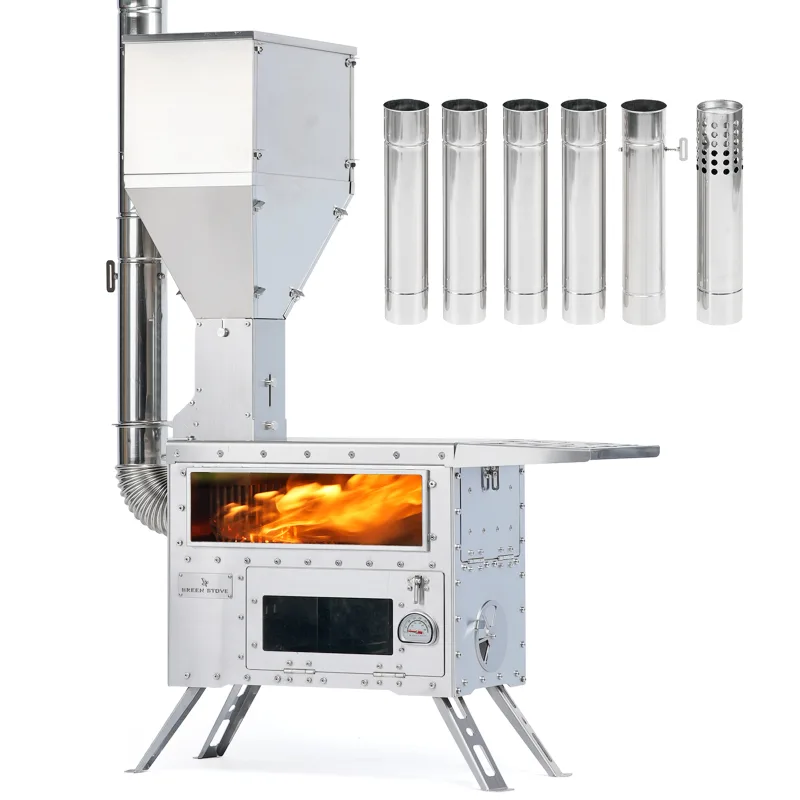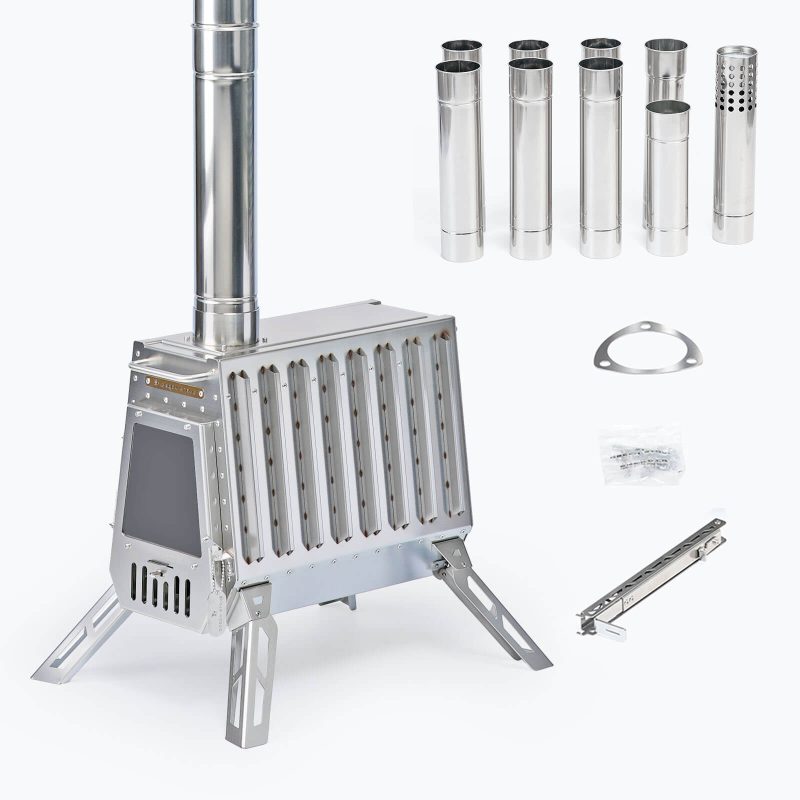
Recently, an important discussion has been circulating within the hot tenting and overlanding community regarding a severe back-smoke incident involving a Hori 5 tent stove running in pellet mode.
First and foremost, we are incredibly relieved that the individual involved in the video is safe. At Green Stove, safety is our absolute highest priority. Hot tenting is an incredible way to experience the winter backcountry, but operating any high-efficiency fire system inside a tent demands respect for the equipment and strict adherence to operational guidelines.
We want to address this directly to educate our community. The transition from traditional firewood to a gravity-fed pellet system is not just a change of fuel—it is a completely different combustion process governed by strict physics.
Here is the science behind how the Hori 5 operates, why back-smoke happens, and the critical rules you must follow to ensure a safe, roaring fire every time.
🔬 The Science: Why Does “Back-Smoke” Happen?
Unlike traditional firewood, wood pellets are highly compressed and burn with intense, concentrated heat. To sustain this, a pellet stove relies on a precise, continuous draft vacuum to pull fresh oxygen in and push heavy exhaust out through the chimney.
If this vacuum is broken, restricted, or overwhelmed by user error, the intense heat and smoke have nowhere to go but backward—up through the pellet hopper and into your tent. This is known as a “backdraft.” 99% of the time, back-smoke is the direct result of disrupted airflow.
To ensure proper, stable, and safe operation, the following FIVE critical requirements MUST be met simultaneously. Missing even one of these will compromise the draft.
🛑 The 5 Critical Requirements for Pellet Mode Operation
1. The “MIN Power” Damper Rule (The #1 Cause of Draft Failure) The chimney damper controls your exhaust, but it has a strict rule: The chimney damper is ONLY allowed to be adjusted when the power adjustment knob is set to MIN. Under all other conditions (medium or high heat), the chimney damper MUST remain fully open. Choking the exhaust while the stove is pushing high heat will instantly break the vacuum and force smoke backward.
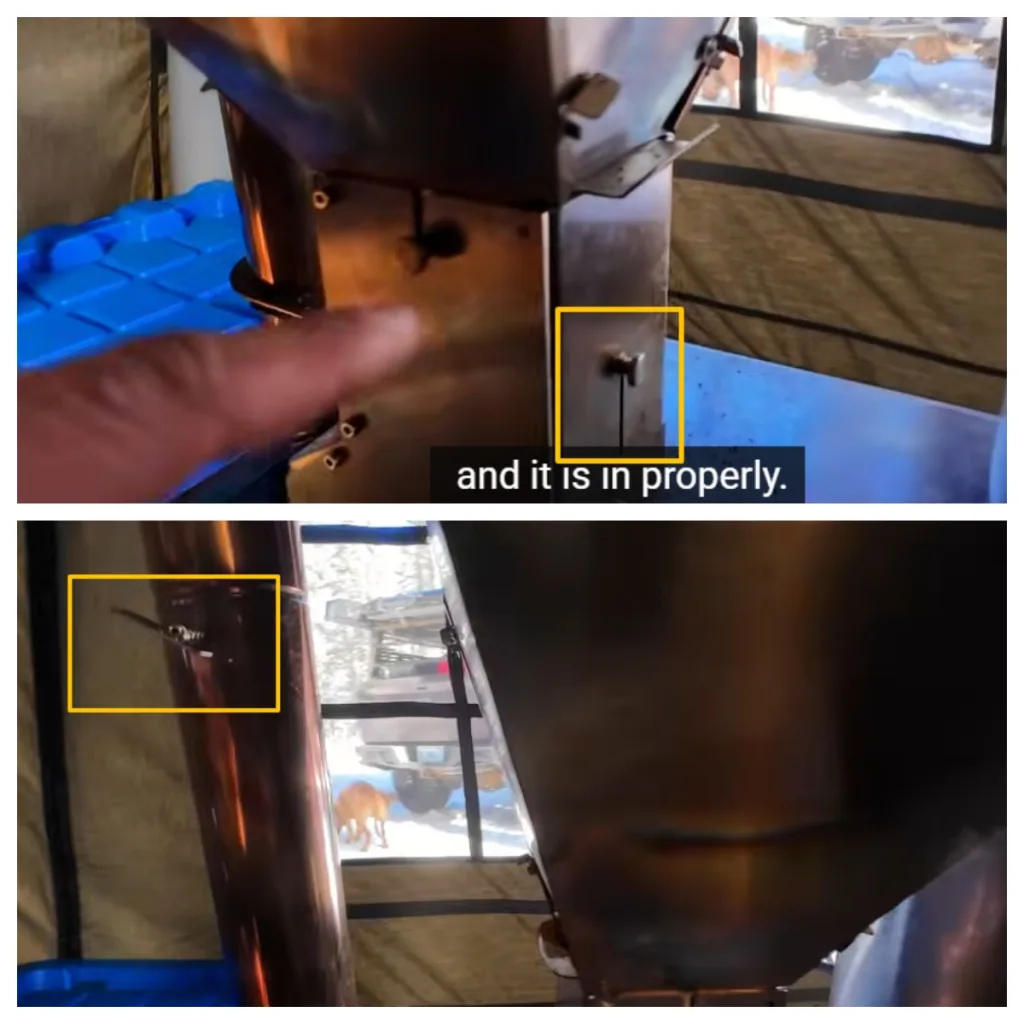
2. Strict Chimney Installation Your chimney is the engine of your draft. The chimney must be installed vertically upward, and all chimney sections must be fully and tightly connected. Any lean, bend, or loose connection will leak air and destroy the vacuum seal required to pull smoke out safely.
3. Lock Down the Oven During pellet mode operation, the airflow must be strictly controlled. The oven door and the oven damper (which serves as the air intake for wood mode) must remain completely closed after use. Unintended air entering through the oven disrupts the precise draft needed for the pellets.
4. Mind Your Elevation Limits Air density drastically affects draft strength. The standard Hori 5 setup is engineered for use at altitudes below 3,000 meters (10,000 feet). Crucial Note: If you are camping above 10,000 feet, the thinner air provides less natural draft. A taller chimney is absolutely required at these altitudes to prevent back-smoke.
5. Premium Fuel Only Do not compromise on fuel. You must use high-quality softwood pellets. Low-quality, damp, or hardwood pellets burn inconsistently, create excess ash, and can clog the burn grate, leading to immediate airflow blockage and smoke.
🔔 Pro-Tip: The “Final Stage” Automatic Air Intake
If you have perfectly satisfied all five requirements above, your stove will run flawlessly. However, you may notice a minor mechanical quirk during the very final stage of operation (when the stove is burning out).
Occasionally, leftover pellets may affect the automatic air intake, and a small amount of smoke may be observed. The Quick Fix: Simply close the automatic air intake manually. This will immediately stop the smoke.
⛺ Don’t Panic: Why the Hori 5 is Still the Ultimate Winter Companion
Seeing a back-smoke incident can be intimidating for new buyers, but understanding your gear is part of becoming a seasoned outdoorsman.
The Reward: Why Master Pellet Mode? While it requires precision and respect for the rules, mastering the Hori 5’s pellet mode unlocks the ultimate hot tent experience. When set up correctly, pellets provide a consistent, roaring heat that lasts for hours—meaning you don’t have to wake up at 2 AM to chop and feed firewood. It’s highly efficient, clean-burning, and designed to keep you warm through the harshest winter nights.
New to Hot Tenting? Start with Wood Mode! If you are new to tent stoves, or if you find yourself camping in unpredictable high-wind conditions, You can always run it in standard Wood Mode. Burning traditional firewood is much more forgiving with airflow and is the perfect way to get comfortable with the stove’s dampers before upgrading your skills to Pellet Mode.
🤝 Share the Knowledge, Keep the Community Safe
Hot tenting is an incredible community, and education is our best tool for keeping everyone safe. We highly encourage all Hori 5 users to screenshot the 5 rules above and keep them packed with your gear.
Please share this safety advisory with your camping partners, in your local overlanding Facebook groups, and with anyone you know who uses a pellet tent stove.
If you have any questions about your setup, your chimney draft, or how to safely operate your Hori 5, please reach out to our support team at [Your Contact Email]. We are always here to help you dial in the perfect burn.
Stay warm, and stay safe out there.
— The Green Stove Team